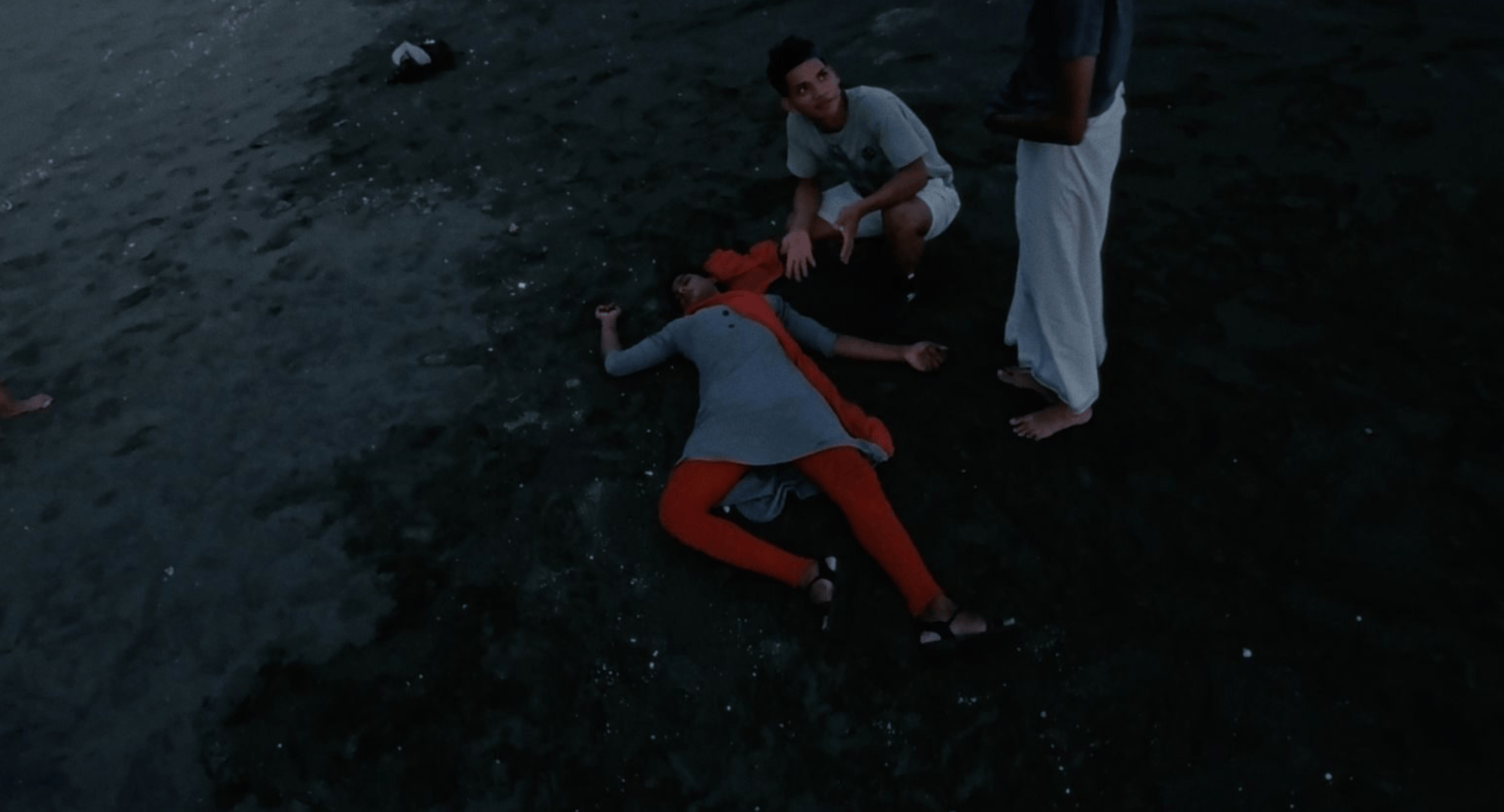
Director Eduardo “Teddy” Williams, he prefers Teddy, is one of those filmmakers who is very difficult to pin down. He’s had an important presence at the film festival circuit over the past decade, and has been hailed by many—myself included—as one of the most compelling voices in contemporary cinema. This comes down to the playfulness of his narratives, which vibrate in their inventiveness, much like most the characters in his films, in perpetual motion through our modern world of late capitalism’s crushing weight. His playfulness is only matched by his curiosity about the possibilities of the form, and the tools which he uses. As mentioned in my review of The Human Surge 3 he pushes and pries at boundaries, and seems to have an insatiable and inquisitive eye, always attempting to find new ways to translate the ways in which he sees the world into film: be it 16mm analogue, a Blackmagic Pocket Camera, or a RED Digital Camera in The Human Surge (2016); or a GoPro 360 in Parsi (2019). He uses all these different forms and formats to explore and examine the world around us, from familiar corners of his native Argentina to Sri Lanka, Mozambique, Peru and many other places.
The Human Surge 3 is shot with an Insta360 Titan camera, a spherical camera with eight lenses that allows you to shoot in all directions at once. This results in an endlessly alluring image, which Teddy Williams then edited with a VR (Virtual Reality) headset, where he recorded his movements to frame the image, and translate it to what we see on the flat surface of the cinema screen. The image is distorted and strange, sometimes it tears apart, and it is always completely captivating to look at in its unreal realness. Sometimes reminiscent of Michael Snow in the ways in which his curiosity for the tools make manifest his structuralism, other times similar to Blake Williams, in their shared passion for pushing and innovating image technology. Yet, entirely his own.
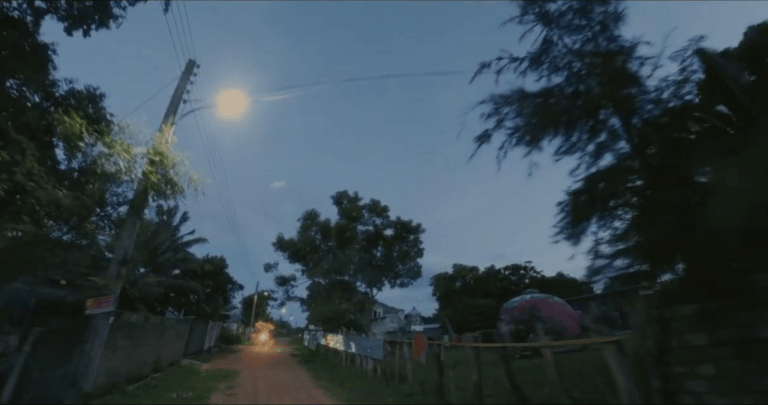
In The Human Surge 3, Teddy Williams focuses on a small band of characters from different places in the world. As in the first Surge, these are people who keep in constant motion. There is always movement in Teddy’s film, whether it is the characters who walk in crowded streets while talking about their lives and what to do with their time, or the camera that seems to have a will of its own; sometimes letting its gaze drift away from the people to follow a bird, an insect, or just the curvature of the earth. This is a film about hanging out with the ones you love, whether you’ve known them for years or only moments, and finding new ways to take control of your own body and time in this world we now live in, where capitalism has taken root all around. Teddy’s camera and characters move from small villages in Sri Lanka to mountaintops in Peru effortlessly, seemingly finding their ways through the ones and zeroes of the digital image; or the digital world.
I sat down with Teddy in late January to talk about this film, my absolute favorite of 2023 alongside Lois Patiño’s Samsara and Franciska Eliassen’s Sister, What Grows Where Land is Sick? We talk about how it was like to shoot with a 360 degree camera, and edit a whole film inside a VR space by recording your own bodily movements. We touch on how the effortless and elliptical traveling of the film, wasn’t as easy in the real world of bureaucracy and capital, and about the different ways one can embrace image-making and image-discovery in digital filmmaking. And we talk about much more in the interview below, with the delightful and insightful Teddy Williams.
NOPRESS (NP): You made The Human Surge in 2016, and now you’ve followed it up with The Human Surge 3. I have to ask: what happened with the second one?
Teddy Williams (TW): I can’t remember very well, but when I started thinking about the next film I thought it was going to be continuous in many ways, and also discontinuous. I thought it would be better to jump to three, and then two can maybe me made in the future. Or maybe never. I’m interested in that empty space.
NP: I think it makes a lot of sense for your film to have this sort of gap, like things lost in digital space, but before we get deep into Surge 3 I wanted to talk about your specific process. I know you travel a lot, and that you don’t do much research about a place before you arrive there, preferring to discover it through the people you meet. Can you talk a bit about how you find the stories you want to tell and how you balance discovery with planning?
TW: Well, in terms of discovery and planning I balance it in many ways. Story-wise, I write things that are not related to any specific place, in my mind. Once I’m there I start thinking about these ideas and about what is still doable in that place, and what is not. And also new ideas come when I see new places [and] speak to people from the area. When I meet the people that are going to act in a film, there are some things they reject more than others. Not in a very big way, but some dialogues they may take to and others not, and then we change that. They also improvise and that’s important as well, it brings a lot. Structure wise, I have ideas before I’m doing the film, and then I see which survive and which don’t. For me, the process of making the film changes the structure of the film, it is not like I go to a place and expect that what I have in my mind will happen, you know.
Also, when the actors improvise they are not only speaking about reality, I encourage them to invent anything they want. But I think even when they invent, that brings a lot of their own experiences, even if they’re talking about a dream or whatever’s on their mind, and not precisely talking in a direct way about how their lives are. I think this is interesting to me, because I don’t want to make films about only my ideas, but how they change in contact with [other people]. The films in the end are like the encounter of those ideas. And the ideas of the spectator as well.
interview continues below image
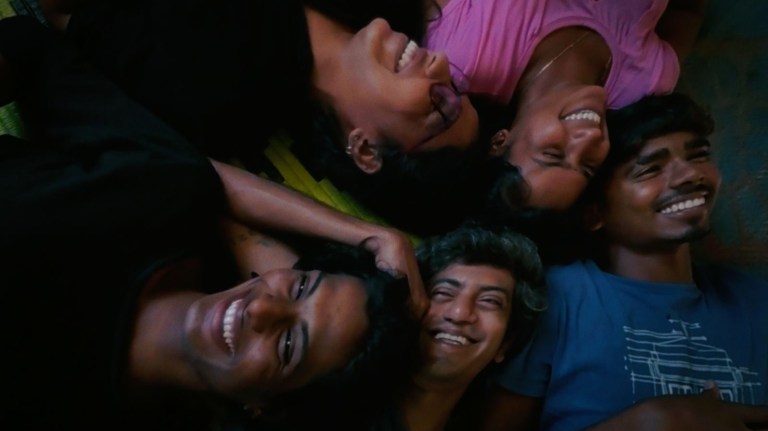
NP: I think you can definitely tell that you have a close collaboration with your actors, it’s like a specific mood in your films. I find it interesting that it feels very similar throughout your career, from your university films in Argentina to Surge 3 which was shot around the world. How do you work to arrive at this connection?
TW: Yeah, I don’t know. I think that the main part is that when I meet people to choose the actors, I don’t make them act, and I don’t analyze them or look for specific things. It’s more about feeling who is more comfortable with me, and who I’m more comfortable with, and how we relate in some ways. Sometimes it’s more of an intuitive way of relating, other times it is specific things; or things that are very strange to me makes me curious about them. I think that’s why there’s a general mood that comes through in the films. Of course, there are other things like how I use the camera in a specific way, even when it’s many different cameras. There’s always a specific relation with the people and the camera in my films, and when we change countries that is always a bit similar. I think this connects a lot and maybe relates to what you were saying about changing places and still having a similar mood. Then the dialogue, even if they are different, I think there’s a sort of disconnect and connection [in them]. For me they have this thing that relates to [online] chats, or the logic of speaking on chat. And even when we change languages, the people take to it in an intuitive way, because we are not rehearsing very much. My main thing is to encourage them to feel as free and relaxed as possible. But yeah, that’s the interesting thing for me, to see what things survive in every place and what things does not.
NP: I certainly think language and dialogue is central to your work, especially in Surge 3 where you move between countries and some actors come with you and they all speak different languages. And I also know a few lines reemerge in your work, lines that are said in one film comes back in another from a different character. I wanted to ask how much of this is written and how much is improvised. It’s probably a bit difficult to answer, but maybe you can speak about the process of writing dialogue?
TW: How much I don’t know, but it is a mixture. Some scenes are totally improvised, and there’s not any intervention from me, or maybe only a small comment. Sometimes I don’t even understand what the actors are saying because I don’t speak the languages, so I discover it afterwards in post-production. So, there are scenes that are very open, where I don’t know which parts I will use or not, or if I will use them at all. And then other things are totally written, so what we see is exactly as it was written. Even for specific movements, that’s things we sometimes rehearse a bit more. Like the movement of a group of people in the same space. Most scenes are a mix between improvisation and the written, for example [we will tell them] when you pass by this tree you have to say this. We have this mood of improvisation, and then all of the sudden this comment comes up that seems to be more fictional and written. And I like to see this change, especially in this film: how they change from acting out written phrases to saying whatever they want. Sometimes it’s different also, I won’t tell them to say a specific line at a specific place, but give them a line or two that I encourage them to say in the moment when they feel like it. I also try to think who I give the phrases to. As you said, there are some phrases that repeat themselves, so I try to see who of the people feel more comfortable remembering things [and who get more stressed by it]. As the shooting advances if I don’t have a specific character to say a specific line, I can choose each day. And then some phrases are more important, I will give those to the people that are more comfortable remembering. It’s a bit of both, I don’t exactly know what the scene will be, but I try to have more possibilities open in the moment, and how to generate these possibilities of what they say or not.
NP: One theme that reoccurs a lot in your films is questions of labor. Your characters talk a lot about labor and work. To me there’s this tension about how we own our own body in today’s society, because even when we’re not at work, we are just waiting to go back there in a sense. How do you think about these concepts when you travel the world, is it something you discuss together?
TW: For me the question of labor and work has been very important in my films since the beginning. I think the reason for me to do cinema is because I found it to be, as you say, a way for me to use my time and my body in something that would let me be curious and interested in [what I do] during my life. When I finished school, I had to think about what my plan was for surviving, at least in an economic way. Almost everyone around me was at jobs they were not interested in doing, right, and I saw that they spent most of their time there. And as you said, in their free time, sometimes they were too tired, or they were just waiting for the next day, or recovering in some way. And the schools I went to were very much preparing us for a life in these types of classical jobs, and I did not want that, or at least I wanted to try to avoid it as much as I could. I knew it would be very difficult because of course, that is what most people have to do, so that was my beginning in cinema.
When I started making films in different countries, I first went to Sierra Leone, to France and Vietnam, the Philippines, Mozambique, and it was very easy to find people that connected to this [feeling of work]. I wasn’t even trying, but whenever I met especially people that were younger or entering the age where economical pressure is bigger, I asked them what they are doing and what they would like to do. And almost all the people told me [similar] things like, I would like to do this, but I will do that. You know, a lot of the time they couldn’t even try to do the things they wanted, but had to choose very fast to do something that was more practical, or more economically viable, let’s say. I think this is when I realized in a very physical and empirical way that this happened everywhere. Of course, we already know that, and I think it’s very important; this question of what we do with our time, and so many people can’t even ask themselves that. I think it’s a very important thing in our societies, or at least the ones I know.
I also think it’s a very important part of the film, even when they don’t speak about it so much. But as you were saying, they do speak about it in a very natural way as we do in our lives. For me, and for my films, of course I want to share some ideas, but I always try to put them in this way in which it feels like we are spying on people or that we’re there in the real world with a real way of speaking and not them preaching to us or giving a discourse on this or that idea to the spectators. To me that’s most interesting, to just be a spy and also to discover what they say and not have people telling me. For cinema I don’t think that’s important. For me, in my films and the films I like, the ideas that are more interesting are the ones that are not said, but that are present in how the film is done, in the rhythm or in the connections [between things].
NP: I wanted to briefly go back to this idea you mentioned earlier about chats. Because I think in your films you can feel the presence of the internet, or even video games, and sometimes it’s difficult to articulate exactly how. Can you talk about how you personally feel the internet and video games etc. inform how our generation experiences the world and the ways we have conversations and communicate?
TW: Again, this comes from my own experience, or starts from that. I spent a lot of time on the internet, and have done since I was quite young. I’m not [someone] who was born with the internet, but I’ve used it since I was very young. For a long time in my life, it was my main [way of] connecting with other people, and sometimes it’s my main way of connecting with the world further away from me. At the beginning it was mainly just other people from the same neighborhood or in my own city. I think in my films, most of the ideas that relate to this comes to me in a very intuitive way, because that time [I’ve spent with] the virtual world, says how I see the physical world and how I think about film and [different] types of images. Many things I discover afterwards. When I start to make a film, I never think about ideas in this way, I just let myself be carried by some images that I’m curious about, or some dialogues that I feel are interesting, but I don’t try to attach them directly to a certain theme, or you know, “this speaks clearly about the internet or blah, blah, blah.”
One example is in one of my first films called Pude ver un puma (Could See a Puma) [from 2011], where they speak about the rhythm of real life conversation. I realized that I’ve talked so much in online chats, that sometimes in real life it’s hard to get into that rhythm when someone speaks you have to answer [immediately]. In the chats we have [more] time to answer, it’s not expected that you answer right away. I also found that the logics of the dialogues I was writing for my films were in a sense related to the [internet] in how information is organized or how we speak about one thing and about another, and then we can go back and forth. It’s not the same as when you speak [in real life] usually, I don’t know. I thought about this logic of coming and going through different things, and not having to stick to one theme after the other. Also, as with work, everywhere I went when I started making my films, everyone was related to technology or the internet in some way. Of course, there are different ways of relating, but at least everyone in the ages I was working with [related to it].
Also, as you were saying at the beginning, I don’t research each country or city very much before I go, and that came in a very intuitive way, but when I think about it, I think there’s a connection to these two worlds: the virtual and the physical, and how they come together in my films. Because when I start to work on my films, I’m mainly in the virtual world and on my computer I discover the world, or not. And what I like about going to places without doing much research [beforehand] is discovering the places and the new ideas with my body in a much more physical way. Learning about the places through the people I meet and through the experiences I have, so I really like to put that together in two different moments and seeing how they come together in the film.
interview continues below image
NP: I also wanted to ask how you think about time or temporality when you create your films?
TW: I do many different things, especially related to rhythm. I think it also comes in a very intuitive way, but of course I think about it because I [believe] it’s super important. But it’s something that’s constructed in every moment of the film. Let’s say when I write, already I have some idea of time and space in a very simple way. In this film, which is different from the others, I wanted to travel with people from one country to the other, and I knew that this would be mixed. In the first film we have three countries, one after the other, but in this one I didn’t exactly know how or didn’t plan what was coming after the other. I mean, I knew [what types of scenes I wanted at] the beginning and the end. I [also] knew I did not want the countries to be what determined the structure of the film in that way.
When I shoot, I think rhythm and time is mainly given by the people I shoot. We share some relation to rhythm I think that might relate to mood or something. And mainly the relation of the actors and the camera I would say. How the camera moves. The types of scenes we have, which are usually long walks through different places. I think that also sets in some way the rhythm; how the camera helps to create the characters. Also, in post-production I can discover some possibilities of rhythm that I didn’t know before, and I think there’s this sense of movement and rhythm, and time is finally given.
There’s also the rhythm of how information is [presented]. For me it was very important to understand or try to understand how some information arrives or can arrive for the spectator. In the film, it’s not really clear what the spectator would follow, so I don’t [always] know what they will follow. But I tried to imagine it. For example, a concrete example is the scene with the spherical houses in Sri Lanka. I knew this scene helped me to show in a more clear way the relation of fantasy and reality in my films. It’s a question in my life that I like to share in my films, the way it’s always difficult to separate them and to understand what is fantasy and what is reality; what is fiction, what is a dream, and all of these possibilities.
But in this scene, I knew it was more clear. It’s very clear that these types of houses are very special for the people who are not from there, [but to the people who live there] of course it’s normal, their normal place. We feel that in their mood and how they go through the place, the things they say, sometimes we understand, sometimes we don’t. Not because of the language, but because they are slightly weird, and then you are like, they are not saying something very strange, but at the same time it sounds a bit strange to me, maybe it’s because of how it is cut or the types of things they say. I know that if I put a scene like this in the beginning, then if I have scenes that are more common [later], they will be impregnated with the feeling of this scene. This also determines rhythm in some ways.
Also, how the different countries would arrive in this film, even if we don’t know where we are, how new languages arrive, how we see them mix, and how we discover the same people are in all of these places, these things for me were a bit like setting up some rhythm. And there was also this general thing of maybe starting in these dark scenes we have in Sri Lanka, speaking more directly about work and not seeming happy with life in that way, and then little by little advancing until we get to the jungle that is far from the cities, and then finally to this mountain where people fly.
NP: You in a sense answered my next question with that because I did want to ask about the structural transitions. In the first Surge there are very distinct transitions through computer screens and ant hills, but here it’s more elliptical in a sense. But this also made me wonder how travelling with all these people worked in practical terms, for visas etc.?
TW: Yeah, it was. It was very difficult. One of the reasons for wanting to travel with people from country to country, and it not being just me traveling, was narrative wise, but also because we know that traveling is not the same for everyone. And at least in cinema, we tend to always see the same people traveling, people with a certain origin traveling more than others. It was difficult, firstly because it was expensive. It may sound simple, but for my type of production, it was very different and it pushed me to work in some [new] ways. We needed a bit more structure than what I usually have, especially for [some people from] Sri Lanka it was complicated. Of course, there is a lot of bureaucracy, [and] for some more than others. And what we also saw was that even when they had all the papers, and they could go through an airport, some [security] people would choose not to believe them. In one airport, they told them that they didn’t believe them and would send them back. So, they were trapped there for hours, and we tried as much as we could, and finally we managed to get them out of the airport.
We also premiered the film in Locarno, and Switzerland denied the visa of one of the actors who already had a ticket and hotel and everything. And I think even if we don’t speak directly about that in the film, it’s an important part of what the film proposes in some ways; bringing together people from places that are not related very often, and trying to push through this unfair system as much as we can. In the film it is shown more in a fantasy way, we are here and there without going through this, but I think it is important.
NP: You have a lot of scenes with all these different people where you are walking or moving through crowded streets and places. Can you speak a bit about the technicality of shooting a film like this, where regular people will be able to enter the camera’s gaze?
TW: Yeah, people will look at the camera and that’s not a problem. I decided it’s not a problem. In the two Human Surges, there are some moments where we clearly see some people look at the camera, but I thought it was interesting in each moment to see how it happens. I think it gives a presence to the camera that might be interesting, and in this type of film where the presence of the camera is very different and very strange, sometimes we feel the camera walking, sometimes it is more [like a] robot. For me the main thing was that it was very important to shoot in a public space. I wanted to shoot in many different public spaces and situations, and I really like to have like a documentary scene, or a scene that is not controlled by us, at the same time as the scene that is controlled by us. I really like to have those things together.
Usually we rehearse a movement, quite a lot, but mainly where we are going to pass and then more or less an idea of distance to the camera in relation to the actors. The camera is following [the characters] but it also has some independence, it’s not afraid of losing the human subject, because I think for me, it’s also interesting to keep a rhythm and also letting the camera have its own presence. You know, sometimes you have to have a permit and sometimes not, and things like this. We have different limitations on time etc. Landscape is very important for me also, I always like to see the people in the landscape, and not isolated from it, that is why we many times see them from very far away, walking through the landscape. I really like that in cinema we can see space transforming as we advance, and that’s important to me when I think about how to go through a place or which places to choose.
NP: To switch gears a bit, I know you shot this film with a 360 degree camera and edited it with a VR headset. Can you speak about that process?
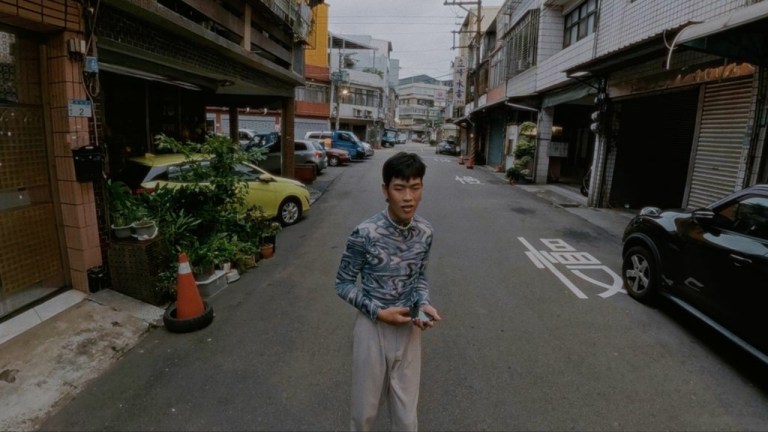
TW: Basically, the reason that I chose to work with a 360 camera (Insta360 Titan), was because of the framing process that I wanted to do in post-production, that I had already tried with a short film I made [Parsi, 2019].
What I did was I edited the two hours of the film [together], and then I saw it in a VR headset, and recorded my movements. So, the frame of the film is what I was looking at with my head inside the VR space. Of course, framing is very important when making a film, and to me the main reason I wanted to do it [with a VR headset] was because it changed the moment when we frame. Mainly the mental state, I mean. I’m not in the same mental state when shooting, when I’m thinking about many things, as when I am in post-production alone in a room and all my concentration is on the framing. And also, the physical relation with framing is very different. What you want to frame and how you observe others through the camera, when you have the camera in your hand, it gives you a different way of thinking, where you want to look. For me that is very important. What I mean is how you look at others and how we are with them is central to the film.
And of course, I wasn’t expecting anyone to [think about] the 360 or VR, you know, I do the film for people who don’t have any idea of how it is done, but I think it really changes the way we observe. I think everyone feels that: how we observe others, and the types of movements this camera has. Sometimes it has these robotic movements that I made with the VR headset, and I like to keep those in because I like this sort of robotic personality that the camera sometimes has, like a security camera or Google Maps. It has all of these possibilities and types of images that we have in our own life, [but] then you see them in a film and they are a bit strange, a bit different.
I discovered a lot of movements I would do, and different things I wanted to look at when I watched the two hours in the headset. It was important for me to do it in one take. I did it five or six times from beginning to end, in a continuous take. For me it was interesting that I now had the possibility of framing the film in one movement, so how we move in the end of the film is because me as a framing person was seeing the two hours of the film as the spectators are [seeing it]. It was interesting to see how this would be in one long framing movement and not done scene by scene.
Another small thing that is important for me related to editing is that after going to each country, I edit and I rewrite. I went to Sri Lanka first, then I edited that and it gave me a different idea of what should happen in the next country, which was Peru. Once I finished there, I edited both together and saw what happened and didn’t happen. This changed my mind on how to continue [the film], how the editing is also part of thinking about the film.
interview continues below image
NP: When you speak about framing with the movements of your own body or head, I immediately think of some specific moments in Surge 3. In a sense it feels to me as much about Image-Discovery as Image-Making in a sense. I wanted to ask about a specific scene in the jungle, where the camera follows the characters, but then suddenly starts to follow a fly or an insect. I’m not sure whether that is a special effect or not, but I can’t imagine it was discovered until you edited the film. I’m not sure there is a question here, but I was really intrigued by scenes like this.
TW: I also like that scene, so I am happy you mentioned this. It also tells you a bit about how I made the film. I really wanted to have flying insects in this film, as before I had ants, but this time I didn’t have any [plans for it] and it is very difficult for me to make them [act for] the film [laughs]. In the jungle there are a lot of flying insects, but you don’t see them very often. So, as you say, when I was watching it in VR, I discovered this fly—or I’m not sure what it is, but it was flying and it came very close [to the camera] and stayed there—so I could follow it. And of course, I did it because I was not going to hire an animal like that. The same for the monkey that we see [later]. There are different ways of thinking about how this could be possible or probable. For the monkey, we left the camera alone in the jungle to see if an animal would come, so it was an idea of trying to generate things without too much industry [or intervention]. There’s also a part where a pigeon passes, and we can follow its path. So yeah, it was a very important way for me to discover this, and this process also gave me the possibility of seeing things I wouldn’t see in [a more conventional mode of] framing.
NP: You mentioned before this different way of being in the frame, and I wondered how you think this relates to different modes of reality. You have the reality of you being there for the shoot, and also the memory of being there, and finally, the reality of you sitting there with a headset to frame and edit it. Another one that’s not so much a question as a thought, but how do you relate to reality in this strange film?
TW: I think how I relate to reality is better seen in the film, than what I can say here, but of course I will try. My way of sharing how I relate to reality is not so good in words, [if it was] I would be a philosopher or something [laughs]. For me the great thing about cinema, or the films I try to do, is that if I can reduce it to one thing for a moment, it would be sharing how I relate to reality through audiovisual language.
There are ideas in the moment of this relation to fantasy or reality that I feel in my normal life, and I found that in cinema there are some tools or some ways of sharing this that I think helped me. I think the most simple way to explain it is, as I was saying, sometimes I choose places and situations that are a bit real and unreal, and we see the people walking through them in a very relaxed and normal way. So, we see that what is normal and what is not is in doubt.
In one of the first short films I made, Could See a Puma, I discovered a destroyed neighborhood on YouTube, that was shot by some tourists. And of course, it was impressive and I was surprised, but I wanted to make a film when I thought about how people would go through this space; these characters that will walk in there as if it’s a normal neighborhood in some way. I think that is a very simple way to share this doubt: you don’t understand their world, they don’t mention this is very strange, because for them it’s normal, since they don’t see the same as you are seeing etc.
Another way to relate to reality was through traveling, trying as much as I could to learn or to share in the films how other people relate to reality, at least seen through the filter of my films. I was also asking myself if I wanted to make films about how I think the world is or how we see the world, or how I think the world should be, or whatever, and I didn’t decide for one or the other, so the films are a bit of everything. Sometimes it’s parts of the world as it is, and sometimes it’s imagining different possibilities, which also relates to reality and what to do with it. And it also relates to what we talked about earlier with work, and having the possibility or not to even think about what to do with your time. All that relates to what reality could be.
NP: I wanted to touch on water in your films. As you mentioned the destroyed neighborhood in Could See a Puma, I was reminded of the flooded streets in that film, as well as in the Argentina sequence in the first Surge, and finally all the sequences with water in Surge 3.
TW: [In Surge 3] we have this neighborhood over water in Peru, where for half the year it is flooded and for the other half it isn’t. The reason I went there was for that specific neighborhood, as I wanted to shoot a scene with people who lived over the water. I also had the idea of trying to make a film where every scene is [shot] under the rain, so I went to Sri Lanka in the rainy season, but it didn’t rain, so that idea wasn’t possible.
But I’m not sure. As with some other ideas like movement or time, water is maybe similar in that I don’t know exactly why. I don’t choose it in a very conscious way. I don’t know, but [with] Could See a Puma, water is why people had to leave and why the neighborhood looks like it does. In The Human Surge 3 it is more about being in water in different ways: sometimes you are in the water to go from one place to the other, sometimes to hang out with your friends, other times to have a party. The party is maybe unusual for us, but for them, the people who live there, the river has such a presence that it is normal to have fun and make parties out on the water.
I also think water is visually very interesting. How it reflects, how it moves. There are many things [about water] that is interesting, but maybe saying them is less interesting than showing them.
NP: I wanted to ask about the technicality of the VR composition, because when you move your body with the headset, sometimes you get these visual glitches or tears in the image. Then there are moments where there seems to be some skips in temporality, where a few seconds in a movement have been cut out or erased. In cinema today, a lot of movies are very clean and such, and I wonder how you think about how an image should look in the cinema?
TW: Mainly, I think each film should look for their own image, and not take for granted that you have to use this or that image. For me, it’s a bit depressing when you feel that images are just the way they “should be,” let’s say, and not because that film needed that type of image.
To start from a more specific point, what you were saying about the glitches in the film. In this film I was thinking that when you have this glitch, you remember that it is a digital image, which makes you think more about the surface of the image. When you don’t have these glitches for a while, it’s easy to forget that it’s an image and you feel like you are there with the characters, hopefully. So, I really wanted to go in and out of this, and I think it is very logical for this film. What we were saying about the internet and how we live in this virtual and digital space, and then we see them as part of that. I especially think about the scenes where the faces are deformed [by the digital image]. I think this was a way for me to share this feeling of being in the virtual image.
I’m always curious on how to think about the image and about time and about cinema, and using different tools. That’s why I’m always curious about using different cameras. Also, when I see these sort of [images] that wants to be the perfect image or the good image, for me it’s very boring. I don’t want to be the “good something,” you know. I don’t want to feed on this idea that there’s one type of image that is better than the other, and I also see the industry behind it. Even if it’s smaller films, you [get used to] this type of movement. Sometimes I like to see the humans behind it, sometimes I like to see the robot that it is.
I think taking advantage of glitches and mistakes is very logical for the film in general, that’s why they work in my opinion. And it’s also fun. When I use a camera, I don’t do much research on how to use it. I see the basics, and then I learn to use it while shooting. So again, like with the countries, it’s about a physical relation to understand what can I do; what do I think I can do with this or that camera. I think it’s a process of using the camera in a more specific way, and not just the way you read in a manual.
NP: I wanted to ask specifically about the final stretch of the film, on the mountain. I was curious about how you composed this section, because to me and my untrained technical eye, I’m not entirely sure what I’m looking at here. Of course, the 360 composites disrupt the image, but here it seems like the frame is broader than in the rest of the film. Can you speak about that, and also those people who come flying into the scene?
TW: As I mentioned earlier, one of the things I knew at the beginning was the first and the last scene. For me it was important to write the last scene to have certain elements in it, for other scenes I’m more open to what will happen [in the moment].
As you were saying, the image feels broader and that’s because it’s no longer in this virtual reality space, but it’s all mapped open. It’s maybe not easy to understand, but when we have the 360 degree images, you can also see it flat, like a flat map of the planet. So here we have that, and the space becomes very deformed. [In this mountain] we have very simple lines [between the images], so it’s not so clearly deformed. If you did this in a city for example, you would feel directly that it is a totally different space. But in this space, it’s more in doubt.
For me, it was also important where to do it. This is on a mountain where we had to walk for three days to get there. We walked all day and camped at night. For me, this was very exciting, but of course not for everyone in our group. It was difficult to do, but it was super important for me. And I did [the walk] with two people before, to be sure how it was and not just go by stories. And we had some people to help people that felt less confident. I think it gave the film something more epic maybe, at least the feeling of being there hopefully passes through the film to the people that see it. But yeah, not being afraid of it being difficult and finally getting everyone there and spending three days together was very important for the energy of the scene, and many of the things they say in the scene comes from what we were talking about when walking together. It also relates to the film, which is about walking and talking together.
I also knew I wanted people to fly, and I wanted to avoid doing it on a green screen, which is what we finally did. During the shooting I tried to avoid as much post-production as I could, but in the end bringing elements to hang people up in the air on a 3000 meter high mountain was very difficult, so we accepted it. But we rehearsed the movements and the moments in which they will speak [on the mountain]. There’s a moment where one of the girls says she feels pixels on her face, or people tell them, and of course we didn’t have that there so we had to know where to do it and make signs for what to say in different places. It is a scene that is planned, but there was of course urgency because we were there only for a few hours and it was very cold.
For me the important part of this was having the feeling in the film of finally having arrived somewhere else. [Similarly] the flying people, since that is unexpected, because the film was not proposing these types of things. Not just people flying, but also these types of effects.
Finally, we have the part where the camera falls [and rolls down the hill], which is like the actors finally take power of the spectator and throw it away. It’s like you try to understand [throughout the film] if they feel the camera’s presence or not, and in the end they take it and throw it.
NP: And was it you who picked up the camera at the very end?
TW: [laughs] No, a lot of people thought it was me, because he’s Argentinian but if you see us together we are not similar, but we have the same type of hair color and skin tones and all that, so yeah …
NP: I also found it funny to learn you climbed the mountain twice, because in the film the characters say something along the lines of “you’re a fool if you never climb this mountain, but you are also a fool if you climb it twice,” … and now you’ve done it twice…
TW: Yeah, that tells you what I am [laughs].
NP: How do you work with sound in a film like this, where you’re shooting with a 360 camera?
TW: Well, the way we recorded sound wasn’t very specific to the 360 degree camera. We did it like I’ve done before, where some people have their own personal microphones, so that we have their voices close even if they are far away from the camera. Another very important thing for me is to try to record as much sound as I can every time I go to a new place. I travel not only for the images, but also for the sound. For the long shots, one thing that’s very important is to have different ambient sounds. As we move, the sound moves with us. As spectators this is maybe something we are not super conscious about usually, but I think it really changes the rhythm, and how these long shots happen. You know when you feel the sound is changing, and then we have all these different sounds in each place that are so rich. In Sri Lanka there are many different animals, even if we don’t see them. In the Amazon, of course, it’s more obvious, and it is incredible that you always have this seemingly infinite layer of animals producing sounds all the time.
For me it’s important to have the voices close. Some people ask me, because we don’t see people’s mouths a lot of the time, if I do post-synchronization or stuff like that, and I don’t. Mainly because they are not professional actors, so recreating the feeling of being relaxed or with friends in a studio would be impossible. But also, even when we don’t see their mouths, we see their bodies, and I think we speak with our bodies and I think it’s nice to have that connection between what they say and how they move. Even if it’s not a conscious thing, I think it relates a lot and wouldn’t be the same if I would shoot differently. And I also really like that we don’t know who exactly is speaking sometimes, and the voice happens to be less individual I think.
[Also] with this camera, we were always conscious that every part of the image could be used. So, we had things that were interesting in dialogue and sounds in many different places at the same time. And that’s why in some scenes we have lots of dialogues on top of each other. I really like to sometimes keep this simultaneity in moments where dialogues are maybe too much for us to read or to understand. But the main thing for me is choosing the ambiance and trying to think about their musicality, even if we’re not conscious about it, I really think it changes a lot.
interview continues below image
NP: Before we finish off, I wanted to ask about some of your earlier work. I’m particularly interested in A Very Long Gif, where it’s this kaleidoscopic art film, which reminded me a lot of the recent film by Lucien Castaing-Taylor and Véréna Paravel, De Humani Corporis Fabrica. Can you speak a bit about how you conceived of and realized this project?
TW: I actually haven’t seen De Humani Corporis Fabrica yet, but I really want to see it. I really like Lucien and Véréna’s films, the ones I’ve seen. And when I was thinking about this film, we have some friends in common that told me they were doing a film inside the body, but of course it’s very different.
For me, this is one of the projects that was made after a proposal from a museum in Bilbao. It was an exhibition about Bruce Baillie, an experimental director from USA who died not very long ago. What I like about [these types of projects] is that they give me a budget and a lot of freedom. Unlike my other films where I have to tell other people want I want to do; this is the part of my job that I like the least and also the one I’m the least good at doing.
The idea at the beginning of the exhibition was to use images of Bruce Baillie, but that was not possible, so in the end it was more inspired by his work. For me, it was the first time I was doing something for a museum space. Before, some of my films had been shown in galleries or museum, but I never made them for those spaces; I made them for cinema. There are many differences of course, but the two main differences for me is that when I do a project for the cinema, I do it to be seen from beginning to the end. And when I do something for a museum, I do it knowing most people will come and go, so it’s more this idea of a loop. This changes how I think about how to do it, and of course the screen situation will be different. In the cinema it’s more of a precise thing, and then in this space, it can change.
This was made at the same time as [The Human Surge 3], so sometimes it was a bit difficult. Or maybe not difficult, but it’s not normal for me to do two films at the same time. I was curious about this pill camera, where you swallow it. It is made for medical purposes, but I wanted to use it in another way. I saw images on YouTube, and I wanted to use it and be able to go through these types of images, and not using it for observing in a medical way. And also, to have the long shot, you know. Maybe I could have gotten images or clips from somewhere, but I wanted to have the images from beginning to end as much as possible, so my partner was the person who swallowed the camera.
I also tried to do a bit of the opposite of what I was doing in Surge 3, and I tried to use a tele lens to observe people that were far away from me in the city. And then the film puts this together; the inner space [of the pill camera] and the outer space with the sound of me walking in a public space. You have this camera going inside the body, and you observe these strange landscapes that sometimes you feel are inside the body but at other times you don’t know where you are, even though you know that they are inside a body. Maybe our inner landscape can be super strange for us, more strange than going to whatever place we are not from.
I also liked this idea of it being three circles [editor’s note: the film consists of three spherical frames, the middle the pill camera, flanked by two frames of landscape photography that move and eventually overlap]. This idea came a bit from the pill camera, since the image came as a circle, and I thought I would like to keep this and also relate it to looking through the tele lens. And when I saw the three circles, I had this feeling of celestial bodies, let’s say. So, I really liked this very slow movement of the circles, at first you think they are not moving, but if you watch it for long enough you realize that they are moving. This made me think of all these imperceptible movements, and our digestion is also an imperceptible movement for us, and I really liked this connection of celestial bodies and the inner body, and I thought this would be a way of sharing that.
NP: I wanted to touch on your short film Parsi from 2019, since that has some similarities to The Human Surge 3, being shot with a 360 degree camera as well. Unless I’m misremembering, this was inspired by a poem that is continually worked on, the poet will never finish it? Do you think this means you might return with a Parsi 3 or 5 or 7 maybe?
TW: Yeah, the poem is by Mariano Blatt. I mean, it is a nice idea, but I think I should wait a bit longer just to have a different idea of the image. Blatt did a few readings of new parts of the poem when we did some screenings of the film online, and yeah, maybe in some years I would like to ask him to send me some new parts and see what happens. It could be nice.
NP: Can you say anything about what you’re working on now?
TW: Well, I finished The Human Surge 3 in June [2023] and then in August I showed it [at Locarno]. Then from September to December, I was lucky to travel a lot to show the film and speak about it, so I haven’t had the time to really think about the next film.
I usually have an idea and put it in my notes, and then when I start to work on a film I look at those notes to see which could work together. This is usually how I start to make a film. Now I have a certain lens or camera I would like to use, it’s the first time I have my own camera, so I want to try to use it and be free to use it however I want. I have less trips now, but I am trying to move, so when I find a place to live, I will start to practice and think about the next film.
I always start my films from very simple ideas or details. It’s not like I start with this idea that I want to make a film about this or that, or here or there. In the beginning I don’t really know. And as I mentioned earlier, [Surge 3] was the most expensive film I made so far, so for the next one I will try to go against that, and make a smaller film. I want to start soon, so hopefully next month I will at least start to put my notes together. We’ll see.

