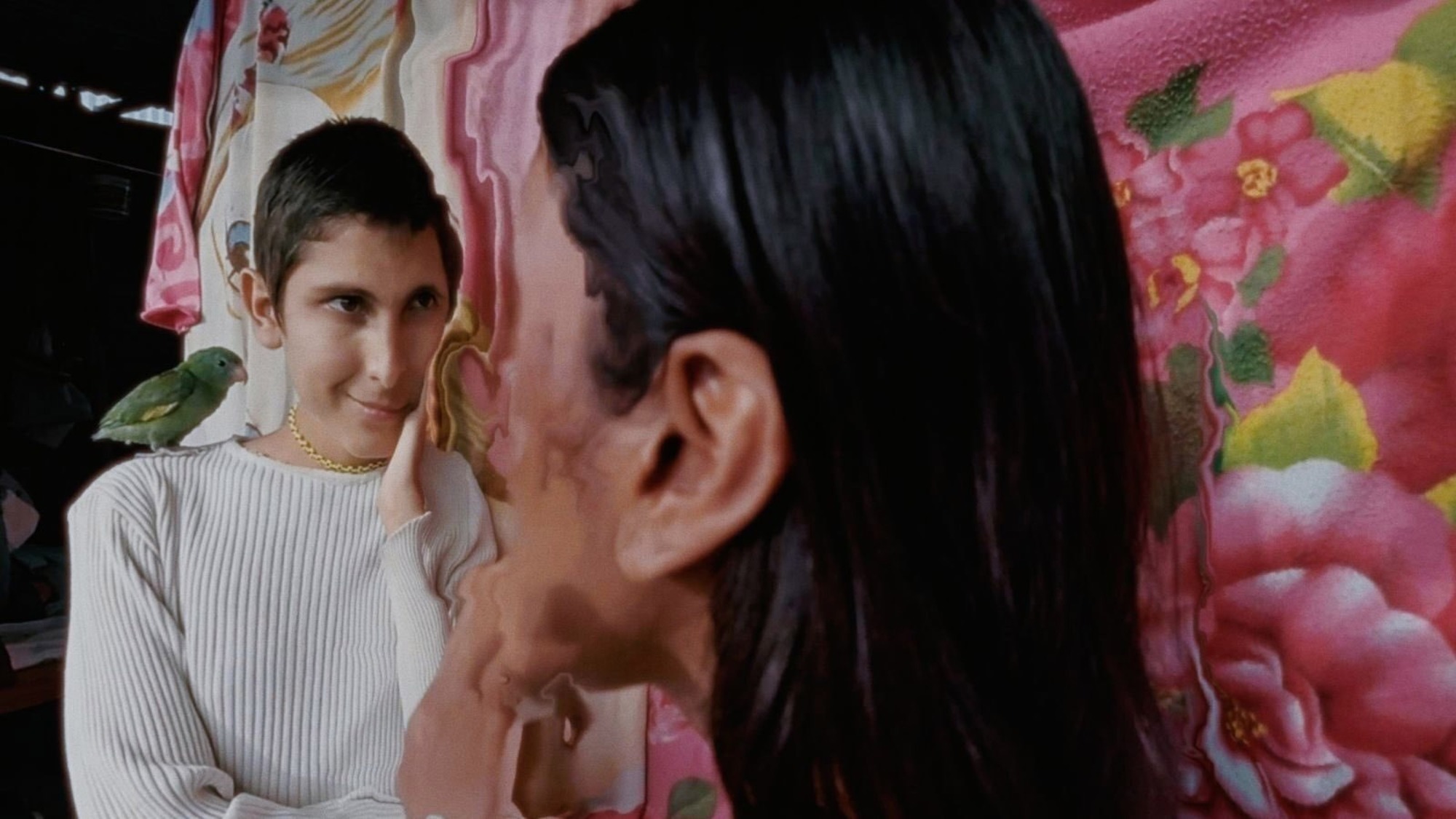
It has been seven years since Eduardo Williams’ feature debut The Human Surge premiered at the Locarno Film Festival. Earlier this year, at the same festival, the Argentinean experimental filmmaker was finally ready with his quasi-sequel, with the slightly mischievous title, The Human Surge 3. One can surmise that the second film was lost in between the zeroes and ones of digital space, as so much else seems to be in Williams’ works.
As a filmmaker who has always experimented with form and format, and made a name for himself on the festival scene with a small but dedicated and loud following, Williams has never felt easily categorizable as a “festival director.” He’s been pushing and prying at boundaries for over a decade, and while critics (myself included) have leaned on labels such as “ethnographic” and “slow cinema” to describe his work, his films always seem to refuse such easy binaries. In The Human Surge 3 he continues to push and pry, this time having shot an entire feature film with an Instant360 Titan, a spherical camera made up of eight lenses that allow one to shoot and compose video that—traditionally—is presented through a VR headset, but that Williams has composited, fractured, and reshaped to fit a 2D surface. This results in not only some of the strangest and most exhilarating compositions of the year, but also a truly transcendental collision and confrontation of notions of the real vs. the unreal image; the constructed vs. the improvisational, the digital vs. the physical: creation vs. excavation of images. Such experimentation could easily be reduced to gimmicks or cheap formal tricks by a lesser filmmaker, but Williams’ genuine curiosity about the possibilities and functions of his tools, makes it so much more rewarding.
Review continues below image
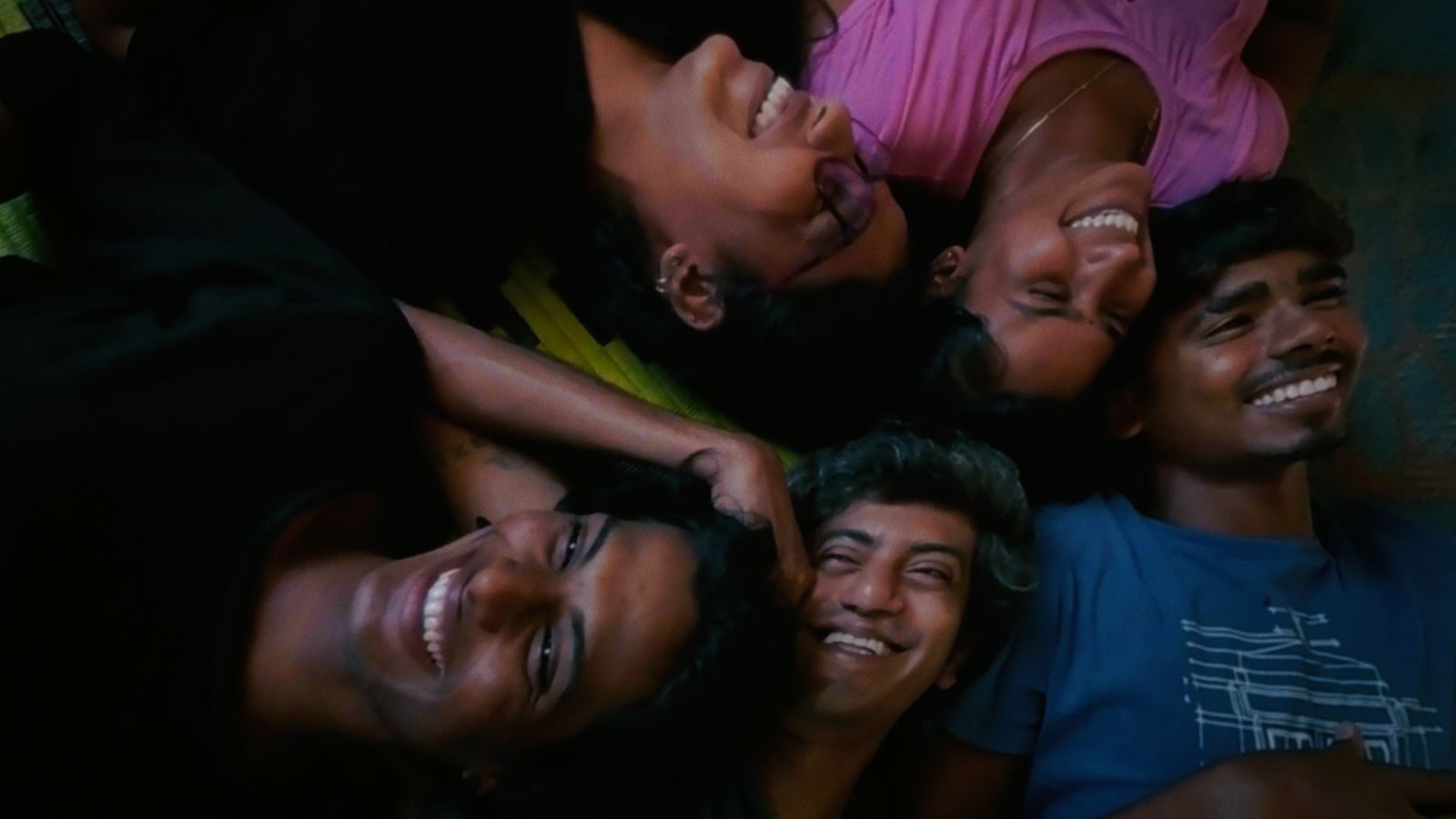
To fully appreciate the ways in which Surge 3 works, it is necessary to reminisce about the first Surge. Here, Williams and his cinematographers (Joaquin Neira and Julien Guillery) worked with three different video formats for the three segments of the film. The first segment was shot on 16mm film, the rich textures and deep grains placing us firmly within the industrial urban decay of the Argentine capital. One of the characters that the film follows engages in light sex work on a video chat service towards the end of the first segment, and the camera moves through his digital computer screen, to arrive in Mozambique, where a larger group of men do the same. Here Williams, Neira, and Guillery switch to a Blackmagic pocket camera, which is then recaptured from a computer screen on super 16. Williams, who shot this part himself, move away from Mozambique through a transition which is at once nightmarishly tactile (akin to the way in which David Lynch burrows down into the dirt of the earth in Blue Velvet) and uncannily digital: the men from the video chat service walk in the forest, when the small pocket camera slowly plunges into an ant hill, surrounded by the workers of the colony as we descend deeper and deeper, and darker and darker, into the soil of the earth. The camera, now a RED digital, pulls out on the other side, calmly rising up from the ground to reveal a woman texting on her smart phone in the Philippines. The films ends with a pristine digital long shot of a screen (smart phone/computer?) being produced in a factory. The world creates the form, the format creates our perception of the world.
This insatiable playfulness and curiosity about video formats is a constant in Williams’ works, and can be traced back to many of his short films as well. Sequences like the descent through the ant hill, have their thematic mirrors in his earlier works, as when Nahuel Pérez Biscayart (one of the only professional actors Williams has ever worked with, he prefers amateurs) wanders through the forest with two friends in Could See a Puma (2011), before one of them suddenly falls into the earth. A sort of practice or prelude to the 360 degree camera in Surge 3, can be found in Parsi from 2019, which I was lucky enough to watch at a small art exhibition in Bergen the same year. This was shot with a GoPro 360 camera, and reached some wonderfully dizzying heights as a pure formal exercise. It is a short film that has stuck with me all these years, which is a rarity for late 2019/early 2020 releases, which in many cases have become a total blur in my memory thanks to the pandemic bringing with it a collapse of time and linearity of events that came just before it.
Review continues below image
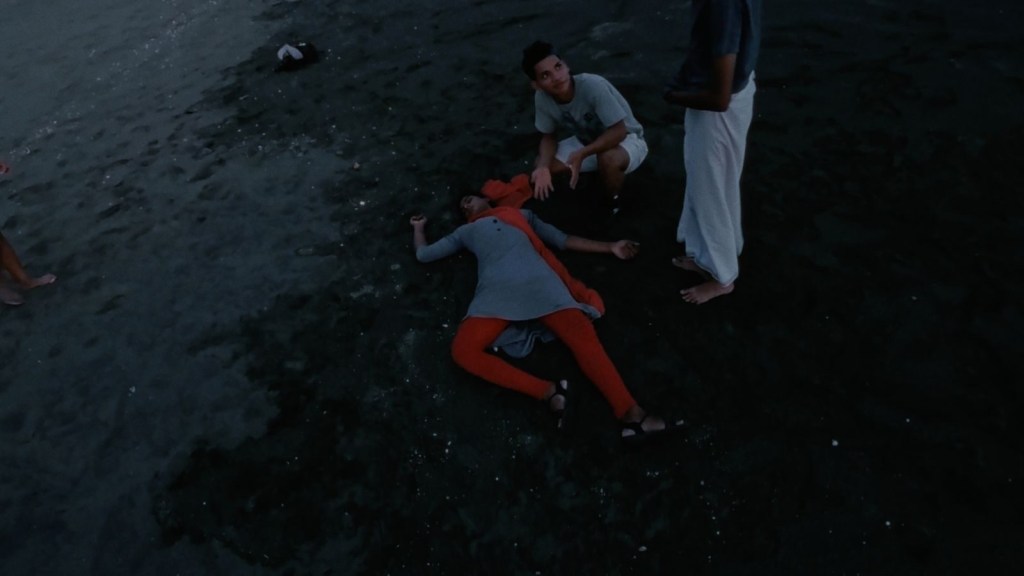
It is clear that Williams’ learned a lot from Parsi, and as he says about his post-production process for Surge 3 in an interview with Jordan Cronk for FilmComment: “I recorded my movements while viewing the images, so the framing was dictated by what I did with my head and my body.” This makes it as much a process of digital image-discovery as of digital image-making, as the film is constructed just as much by Williams’ search through the almost infinite possibilities of perspectives and compositions, as by cinematographers Victoria Pereda’s gaze with the physical camera. It is difficult to explain the unreal realness of some of the scenes in Surge 3 without going into specifics, so a brief aside about its “plot” is in order.
Similarly to the first Surge, this film is “centered” (a problematic word in this circular/spherical/compositorial film) around younger people who all find themselves in various situations of uncertainty and distress. A shared theme between them and the people from the first Surge is their continued existence on the peripheries of employment; some people arrive at work only to be fired, others make money through other means (as the young men doing cam work mentioned above). The world, in Williams’ films, is one of alienation and distance, one in which individualization has made it difficult (or impossible) to define your own self as a separate being from your profession or occupation, and—crucially—being able to have an identity that isn’t purely performative (or online) in this interconnected world. It is a world in constant flux and in constant motion, a world that has no time to wait for you or the ones you cherish. It is a world where you have to have work, or aspirations for a career, for others to see you as a person, but Williams’ characters refuse to conform. They wander and loiter in seeming aimlessness, finding new ways to live and love. Both Surges takes us on a journey around the world, across literal and figurative borders; through land and through the digital doorways of the internet. It’s a global condition.
While the traversal from Argentina to Mozambique to the Philippines imbued the first Surge with a semblance of a narrative structure and a distinct formal device, Williams is much more elliptical here. We are given no easy transitional moments, no concrete pathways from one country to the next, but rather drift from one place to another, and unlike the first film, this time some characters move with us. Characters we meet in one place, suddenly appear in a completely different country, and to confound things further, conversations and languages mix and mingle, making it difficult to tell who is talking at any given time.
Review continues below image
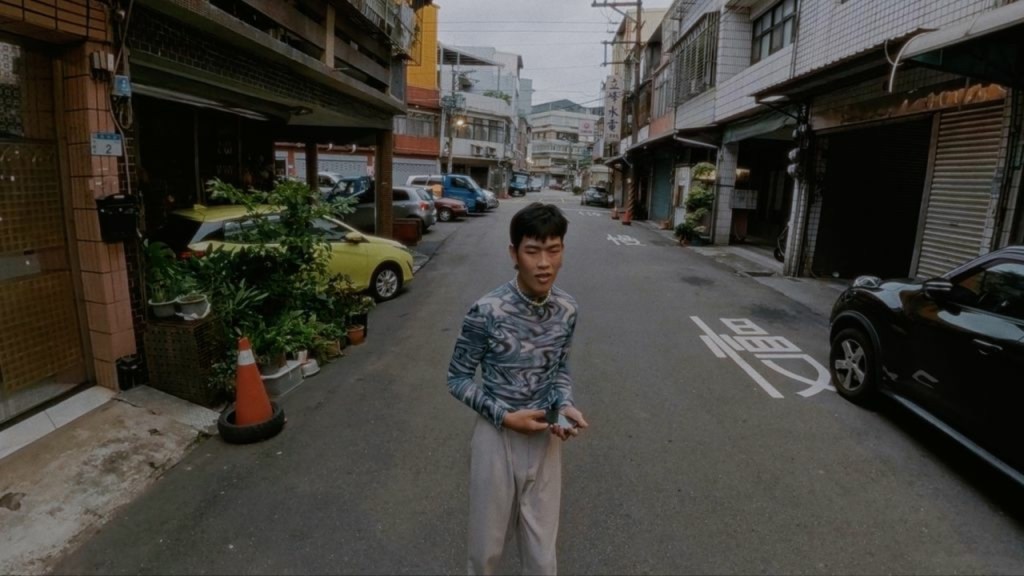
The camera also floats. In certain scenes it seems to be struck by sudden inspiration or curiosity, moving away from the characters it has been gazing at for long stretches of time. This languid perceptional approach to cinematography, in which the camera seems to have a discernible desire and will of its own, searching out what it wants, is certainly not new (it can be seen in filmmakers as varied as Apichatpong Weerasethakul and Bi Gan to Radu Jude’s recent trifecta of masterpieces), but through Williams’ 360 Titan, it opens up to impossible perceptions and perspectives. This allows Williams to not only forget cinematic conventions (such as match cuts or any discernible 180-degree rule), but to wreak havoc on them in their entirety. One example is late in the film, a handful of characters are gathered around an enormously large tree in the forest. Some seem to be asleep while others are deep in conversation as the camera circle the massive trunk. Suddenly, the camera spins around, one of the eight lenses has caught in the center of its frame, a small fly buzzing in the air. Almost certainly not an intentional detail when the scene was shot, but one that Williams and his collaborators discovered in post-production. The scene then follows the fly, with digital zooms and pans that seem to fracture and tear at the digital image, glitches and pixels push through the frame as Williams’ follow it with his VR headset.
Later, in another forest, the camera holds on a small river bend in the jungle. It’s almost completely covered by twines and twigs, but it is possible to make out some water and a small boat tied to a branch. Minutes pass of wind and waves as the only motion in the frame, when suddenly, a small monkey makes his way through the trees. He climbs out and into the boat, and watches—curious about the Titan and its operator, certainly, but also just going through his daily motions, perhaps. He falls in the river. The camera stays still watching the ripples in the water. Suddenly it starts to spin, and it spins, spins, and spins some more, until it reaches impossible speeds. As it rotates endlessly round and round, turning the tactility of the wet jungle into pixels and blurs, it tilts upwards, stopping at its axis. The trees, branches, sky and clouds, all merge together into a kaleidoscopic canvas. It looks inconceivable, but it’s simply our world from a new perspective. This is key to Williams’ entire enterprise. He isn’t purely experimenting with form to destroy the image as we know it, or to make images we’ve never seen before for the sake of it, he attempts to find new ways to view the world and our place in it.
It is difficult to articulate its effect in text, but the ways in which Williams’ uses modern technology to create impossible movements with his camera, is not too dissimilar to Michael Snow’s seminal La Région centrale, and the mechanical camera-arm the Canadian master utilized at the top of a mountain in 1971. While they share in their structural and formal interests of what a camera can do, Williams and Snow are of course drastically different filmmakers. It is therefore more tempting to mention a more recent work, a remake of La Région centrale, with a title Snow certainly would’ve approved of, RGNCNTRL, from earlier this year by Alvin Santoro. Santoro’s film has the same mission statement as Snow’s original from 1971, but Santoro recreates it in the video game Red Dead Redemption 2. Santoro’s mechanical camera of inhuman movements has an even stranger culminating effect than Snow’s because the world of course isn’t real either. Unreal plus unreal equals, I don’t know. This quest for the real or unreal in image-making is integral to Williams’ entire career as well, and it is abundantly clear throughout the entire runtime of Surge 3, but no more so than at the end.
Towards the end of the film we find ourselves on a naked mountain, the horizon stretching endlessly before us. A large crater sits in the middle, as the camera moves slowly ahead towards it and the miniature silhouettes in the distance. This is where the 360 degree camera is at its most befuddling, and I won’t purport enough expertise in optics or lenses to explain the how’s of it all, but it seems as if Williams has taken the coverage of all eight lenses, and pulled, stretched, and smashed them all into a single flat surface. The lenses, which would allow you to look around with a VR headset, is now one field of view, and its effect is haunting. The mountain-top is too vast to let us look beyond it, and it seems like an infinite loop made up of finite resources. The curvature of the earth is not only seen by the camera high in the sky, it is almost made manifest by it. The realness of the image is made as unreal as possible with in-camera effects, and while Williams also utilize slight digital effects to enhance the deterioration of physics and its laws, it is for all intents and purposes entirely real. The trick then is as close to real magic as we can come in modern filmmaking, and perhaps not too dissimilar to how people must’ve felt a hundred years and more ago when films was still in its infancy and trains, moons, and eyes being cut all felt entirely new. Entirely strange.

