Fransicka Eliassen’s feature debut Sister, What Grows Where Land is Sick? (Den siste våren) is a film of beautiful imperfections. It is at once mystical and physical—mythological and material—a conflict that is apparent in the story as much as it is inherent in the form. It is a deeply subjective work that has a lot to say: the ecological existential anxiety of the younger generations that is becoming more palpable by the hour. The constant inundation of apocalyptic news is enough to overwhelm anyone, and it is hard not to sympathize with those who lose themselves in the dread. Eliassen’s film is more than a hopeless tale of insurmountable odds, however. It is filled to the brim with hope and paths ahead, for our personal relationships as well as our place on the earth. It is a film about two sisters who want to understand one another and be there for each other.
The two sisters, the older Vera (Ruby Dagnall) and the younger Eira (Keira LaHart) moved from Oslo to a small town in the north of Norway when their mother fell ill from the strains of city life. Vera seems to carry the weight of the world on her shoulders, a world that is slowly (or rapidly?) becoming less and less hospitable for many humans and animals. This acute ecological anxiety is at the core of Vera’s entire identity, which makes it difficult for her to assimilate or conform to other people’s expectations of a young woman. She’s seen as erratic and strange by those who don’t share her existential angst. In an attempt to better understand her older sister, Eira begins to read Vera’s diary. This diary is reminiscent of any younger person’s scrapbook, permeated with unfiltered and rage-filled poetry and ideas, collages of news headlines, and pictures of public figures that seem to inspire or enrage the young older sister. It is through this diary—through Eira’s pursuit to better understand her sister—that the film finds its distinct subjective form.
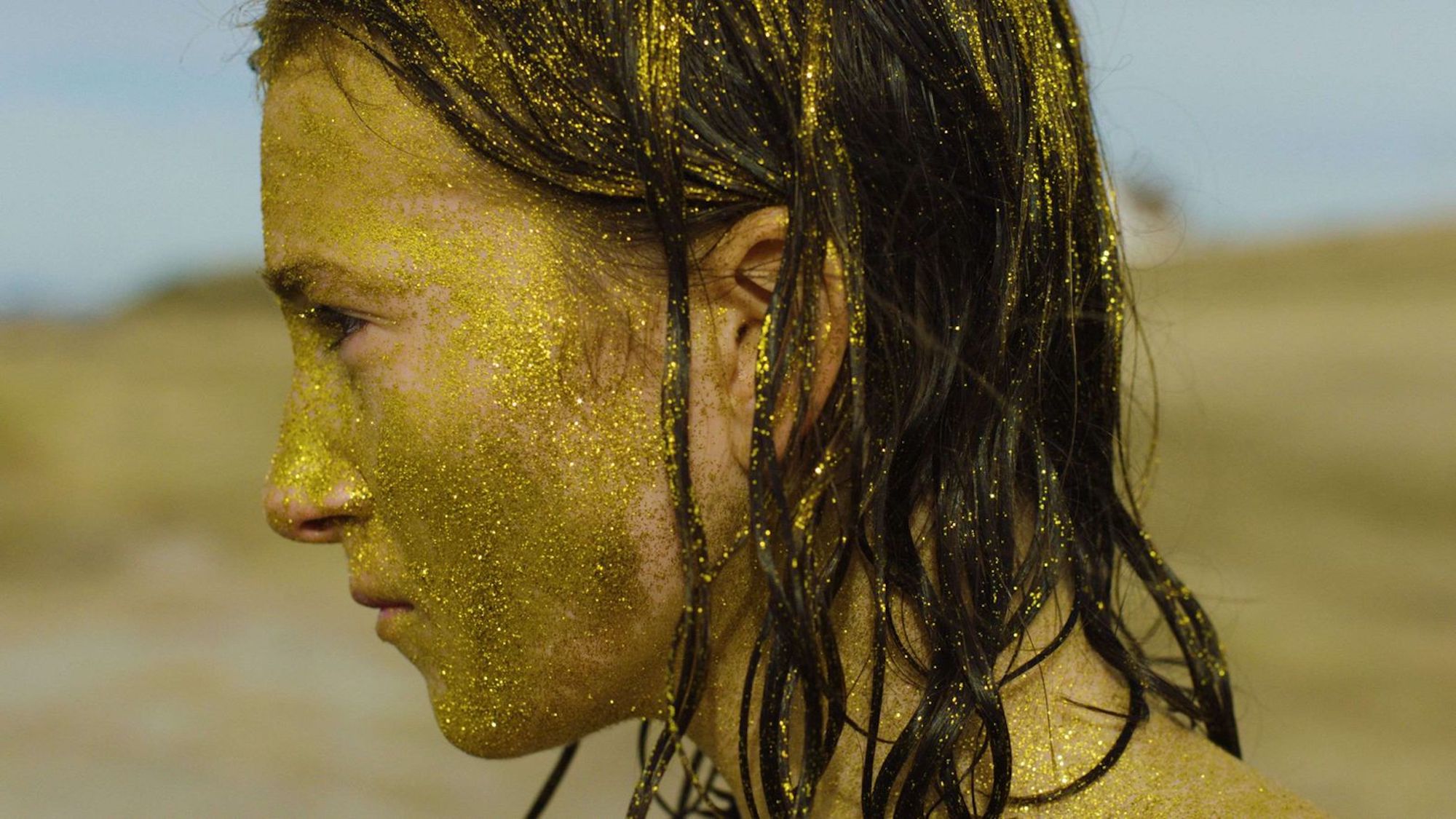
As Eira reads her older sister’s thoughts, desires, fears, and anxieties in the diary, the film takes the form of an almost fragmented narrative, oscillating between myth and memoir. Scenes are not so much informed by a traditional narrative or character structure, but of a sensory and inquisitive nature. The film manages to convey the subjective point of view (of another subjective point of view) through the way in which Eliassen has structured and edited her film. Scenes of total abstraction are followed by scenes of mundane realism, without the one obstructing the other. This becomes clear very early on in the film: first, a scene of Eira in a bathtub, quiet, contemplative. Eliassen crosscuts this scene with one of Vera, drying algae inside their home—sea water dripping heavy on the wooden floor—while a voiceover from her diary (in Vera’s voice) plays over both sequences. Suddenly, Eira submerges herself, at the same time as Vera seems to arrive at an epiphany. As Vera cuts a line of thread, the film hard cuts to the seaside with a close-up of Eira covered in gold glitter. She observes a mysterious figure walking across the frame, dressed in colorful garbs. Back in the bathtub, Eira seems to wake up from a slumber, but she’s still covered in gold, now soaked in the water of the tub. The gold shimmers across the painfully plain bathroom. Cut to the next scene: Vera and Eira are together in the woods, both seem bored and tired, while Vera speaks of the local history of witch burning in the 17th century. Women were burned and decapitated for the crimes of “causing” bad weather or accidents at sea. Is the figure from the previous scene a remembrance of these witches? The mythical and the material co-exists in the northern Norwegian landscapes of the film, and Eliassen seems to place as much importance on both.
In a world governed by institutions and systems that systematically oppress any form of dissent and disagreeableness, the lack of agency becomes palpable. Eliassen allows the edit to surge out from this unpredictable subjective point of view. Scenes exist on unstable grounds, and it moves in elusive ways. Eliassen’s edit is inherently dialectical in this sense, and it is through this mode that the film becomes more than some of the simple classifications thrown its way. It is for sure about ecological anxiety and mental health, and how to navigate a world in which these conditions force you to the sidelines of society, but it is also so much more. The mythical allows the film to philosophize and fantasize about another more harmonious world, while the material becomes forcefully political and concrete. It’s as much a sensory film as it is an activist one, and above all else, it is a film about sisterhood. The relationship between Vera and Eira, while sometimes strenuous and difficult, is the heart that makes the film work.
Vera and Eira seem to orbit one another as planets. With an untethered axis between them, they seem to pull and push at each other from one moment to the next. At one point carefree in their happiness together, and the next their gazes are filled with suspicion or frustration. This is clearest in what might be the film’s strongest scene, in all its simplicity. The sisters are fishing together, and Eira gets a fish on her hook. They are ecstatic and nervous, both screaming and laughing at the same time. A hard cut to the fish, dead and gutted on the cold wet grey rocks, as Eira pokes and prods at it with a dull knife. Suddenly the mood changes, as Vera feels bad about the fish’s suffering. She places the blame on Eira, asking her to stop with repulsion in her voice. They sit silently on the cold rocks, red-cheeked and with snot running from their noses in the northern winds. It is here the film is at its strongest, where the camera observes the two sisters in their day-to-day activities.
It is in scenes like the one mentioned above where the two lead performances truly shine, particularly that of Keira LaHart as Eira. She uses her entire body to convey what Eira feels, never giving in to excess. From frowning with just her nose or awkwardly twisting her fingers at the edges of the frame, LaHart controls her performance in much the same way that Kristen Stewart does, where it feels as if the emotion necessary to the scene possesses her entire physicality. Dagnall is also wonderful, and gets more to work with, but it is LaHart’s subdued and utterly sincere performance that deserves extra recognition.
Sister, What Grows Where Land is Sick? may be the strongest debut from a Norwegian filmmaker since Mariken Halle’s Maybe Tomorrow (Kanskje i morgen) from 2011. The fact that now, 12 years later, Eliassen arrives on the scene (thanking Halle in the credits to her film) without support from the NFI, making it all the way to Locarno in 2022, makes me hopeful for independent cinema in Norway. Not only because it is the most invigorating film from Norway in recent years, or that it was one of the best films at Locarno last year— in a line-up that included Helena Wittman’s formalist masterpiece Human Flowers of Flesh and Ana Vaz’ delightfully alluring It is Night in America—but also because it is such a deeply felt work. A film that dares to bare its heart to the audience, and let the audience embrace it with their own.

