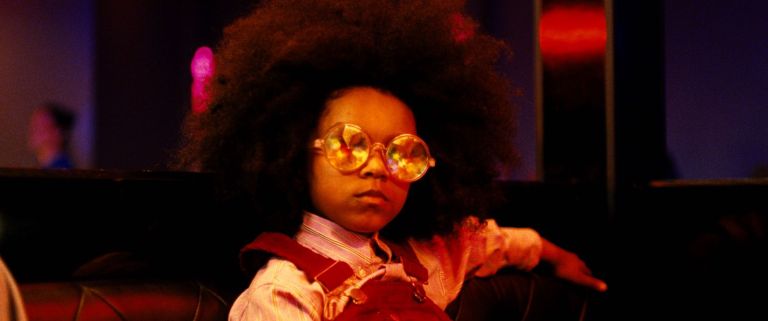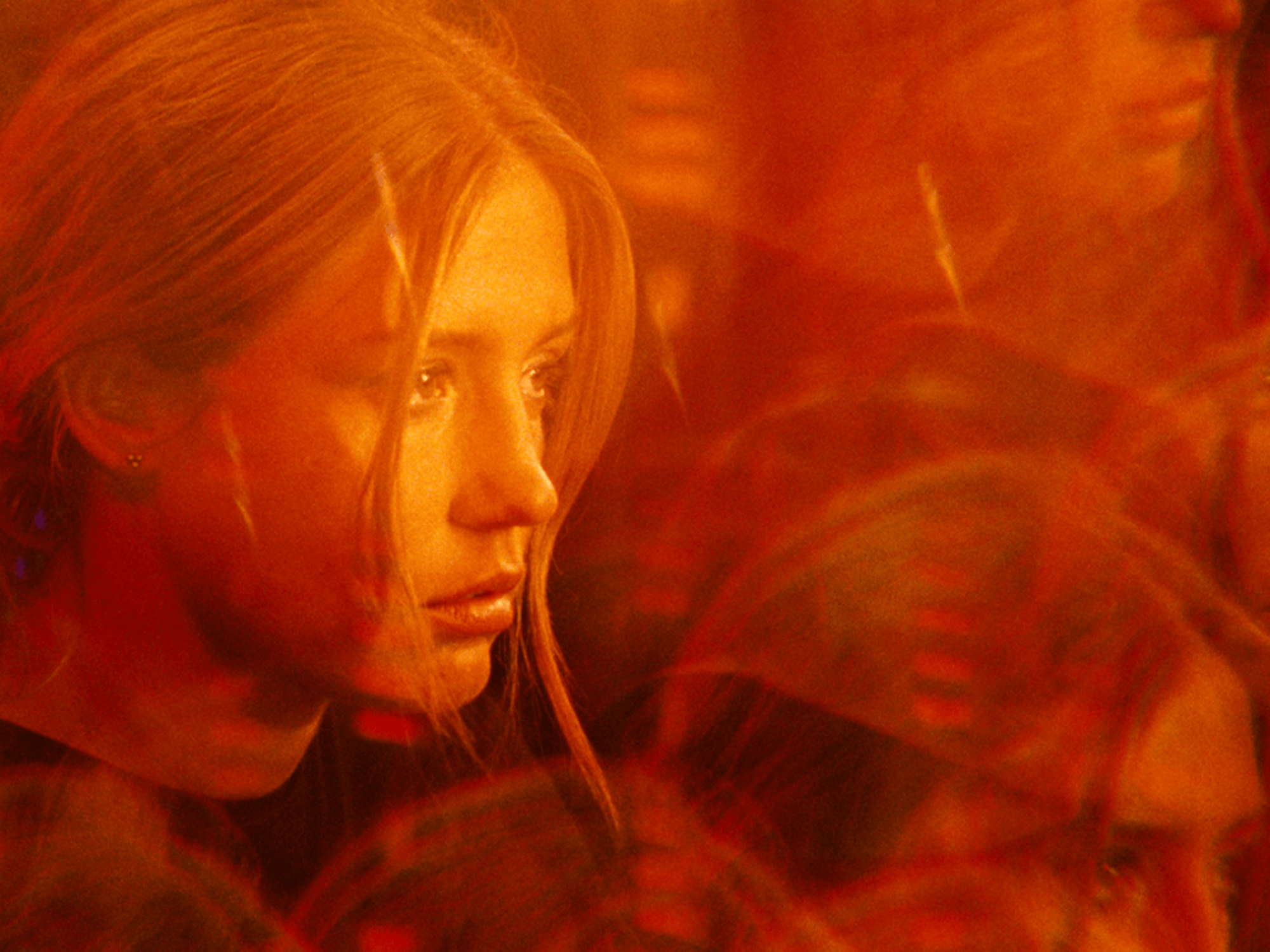
“… did you love me before I was born?” asks Vicky (Sally Dramé) of her mother Joanne (Adèle Exarchopoulos) in Léa Mysius’ The Five Devils. It is a primal question from daughter to mother, one that most children will struggle with as they grow up and become curious about the world around them and more aware of the interiority of the people that care for them. It is a torturous prospect, almost an impossibility for a child, to conceive of a world in which a mother did not love them. This question is what ties Mysius’ film together, from her interest in the bond between mother and daughter—also central to her feature debut Ava (2017)—the pains of adolescent awakenings—also central to her short films like Cadavre exquis (2013), Thunderbirds (2014) and L’île jaune (2016)—and the interplay between genre cinema and personal reckonings.
In a small town near the French Alps, an eight-year-old Vicky (maybe this year’s most convincing performance by the young newcomer?) lives with her mother Joanne, and her father Jimmy (Moustapha Mbengue). Joanne and Jimmy are not very close anymore, and the distance that has built up between them seems to have had an effect on Vicky as well. She’s closer to her mother, but there’s still tension there. Both of them seem to regard the other from a distance as if they are afraid the other could pull away if they got too close. With the sudden re-appearance of Julia (Swala Emati), Jimmy’s younger sister, the strains and disruptions in the household are put further to the test. Vicky has a peculiar sense of smell, able to identify almost any scent with her eyes closed; from the coffee-stained notebook from Joanna’s workplace at the public pool to her exact hiding spot in an evocative moment of hide-and-seek.
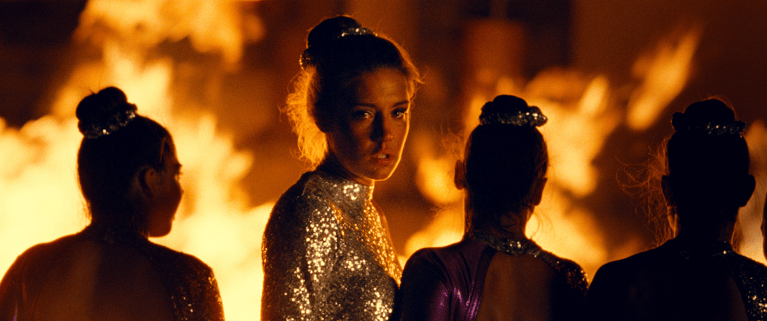
It is this sense of smell that sees Vicky fall into the film’s starling wonderland of memories—like Proust’s madeleines but charred and erratic rather than savory and sweet. She creates various concoctions of different people’s smells, as a sort of conservation, but when she adds an unknown ingredient to the mix, she is jerked into their memories; able to walk around and interact with the world, but not seen by those whose lives she wanders through as an uninvited guest.
The Five Devils is difficult to categorize. Mysius works in many different realms and genres, at times as unfixed and untethered to any one particular tradition as Vicky seems to be to the linearity of experience. The film fluctuates from the psychological thriller to the family drama to the love story and furthermore to the tragedy and the philosophical, as much inspired by Walter Benjamin as Bertrand Bonello, perhaps. The shades of Bonello, while potential conjecture on my part, are difficult to ignore. From the licensed music (like Alexandra Savior’s But You and Soap&Skin’s Me and the Devil—which would certainly feel at home in Nocturama or Coma) to the film’s almost rhizomatic historicism, where fluctuant memories force their way to the surface of Vicky’s mind to reshape the world as she experiences it.
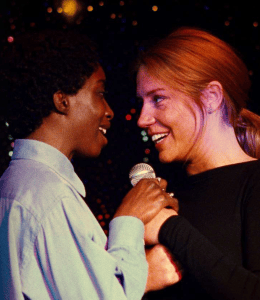 The film is shot on beautiful 35mm film, which grants the hidden and the forgotten its privacy in the beautifully textured nuances of the dark blacks of night and the deep blues of the late evenings in the French Alps. Mysius, and cinematographer Paul Guilhaume, utilize the 35mm to its utmost effect, especially in the sequences where Vicky is transported back into someone else’s memories. The camera’s gaze is fixed by a steady cam, and it glides through the scenes like a ghost, as if the specter that haunted the late capitalist world of Nocturama or the desperately loving apparition of Assayas’ camera in Personal Shopper has been conjured by Mysius in an attempted search for what connects us to the ones we love. The film’s rhythm also feels haunted, where the cacophonic and deeply primal score by Florencia di Concilio and the collection of pop songs seem to possess the edits of Marie Loustalot and make the whole film move to its strange and discordant, but utterly engaging, pace. Much like how Mysius used 35mm film in Ava, and Ana Vaz recently did in It is Night in America, there’s a tactile correspondence between the tool and the narrative, in which the degrading film stock in Ava mirrored the decay of sight, so does the film stock in The Five Devils carry with it a sensory remembrance, even when projected digitally.
There’s a clear dialectic in the way in which Mysius engages with human experiences and senses that is endlessly pleasurable to engage with on an intellectual, but more essentially, emotional level. Mysius seems obsessed by the senses, the practicality and materiality of their uses, as the loss of sight and its extreme transgressions on our autonomy in Ava, and the philosophical: do our lived experiences dictate our senses or is it the other way around? This is made explicitly clear in Ava, where the gradual loss of sight changes Ava’s world dramatically, but it’s also there in Vicky’s sense of smell. Certain scents and aromas carry with them immediate memories for us, and much like the abrupt interruption in our cognition caused by a moment of déjà vu, so does our sense of smell and the hippocampus seem interlinked to jolt us awake with memories we might have forgotten shaped our lives.
There’s a real sense of the phenomenological in Mysius’ treatment of the senses, in how we perceive time and lived experiences as they unfold before us, and how that shapes our perspective. It raises the question of what came first: the memory recalled, or the sense recalling? There’s no answer, of course, but Mysius’ is too affectionate to let it be open-ended and too intelligent to attempt a concrete answer, rather, she provides us with an interpersonal reconciliation. Through all the genre elements, through all the drama and tension, what is at the core is the story of a daughter and her mother, and the love that bind them to each other and the people around them.