It did not take many months (or weeks?) for the lockdown film to become its own genre and trajectory in our current landscape of film production with the ongoing Covid-19 pandemic. Whether it was related to production difficulties or personal modes of expression, a lot of filmmakers decided to create new films—short and long—in the confines of their own homes. The result has been varied, to say the least. A lot of really terrible, vapid, and empty projects that seemed lost in their own pseudo-psychoanalyzing of the Self in isolation; yet we’ve also seen great work such as Radu Jude’s A Fable, Sophy Romvari’s Some Kind of Connection, and perhaps even Sam Levinson’s Euphoria: Trouble Don’t Last Always and Steven Soderbergh’s Kimi. Bertrand Bonello’s Coma is firmly in the latter category, in all its strange and scary playfulness.
Coma opens on a video letter from Bonello to his daughter, who turned eighteen as the pandemic hit. This letter was first released as a short film for Fondaziona Prada during the first lockdown in France and sees Bonello address his daughter directly. He speaks with concern, full of careful consideration for the world in which his daughter now has to maneuver. “Nocturama was for you” he says pensively, perhaps reassessing (or reasserting?) his attempt to understand a generation and the late capitalist world that imprison them. The original short now functions as a prologue, much like Morgane Dziurla-Petit’s Excess Will Save Us reincorporates an earlier short to extend an idea that has become more immediate as time has moved on.
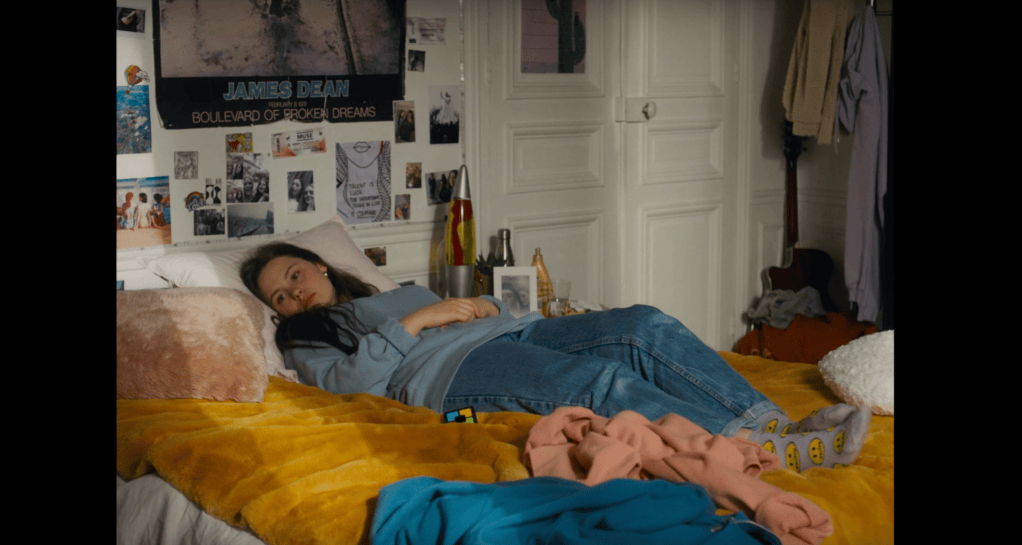
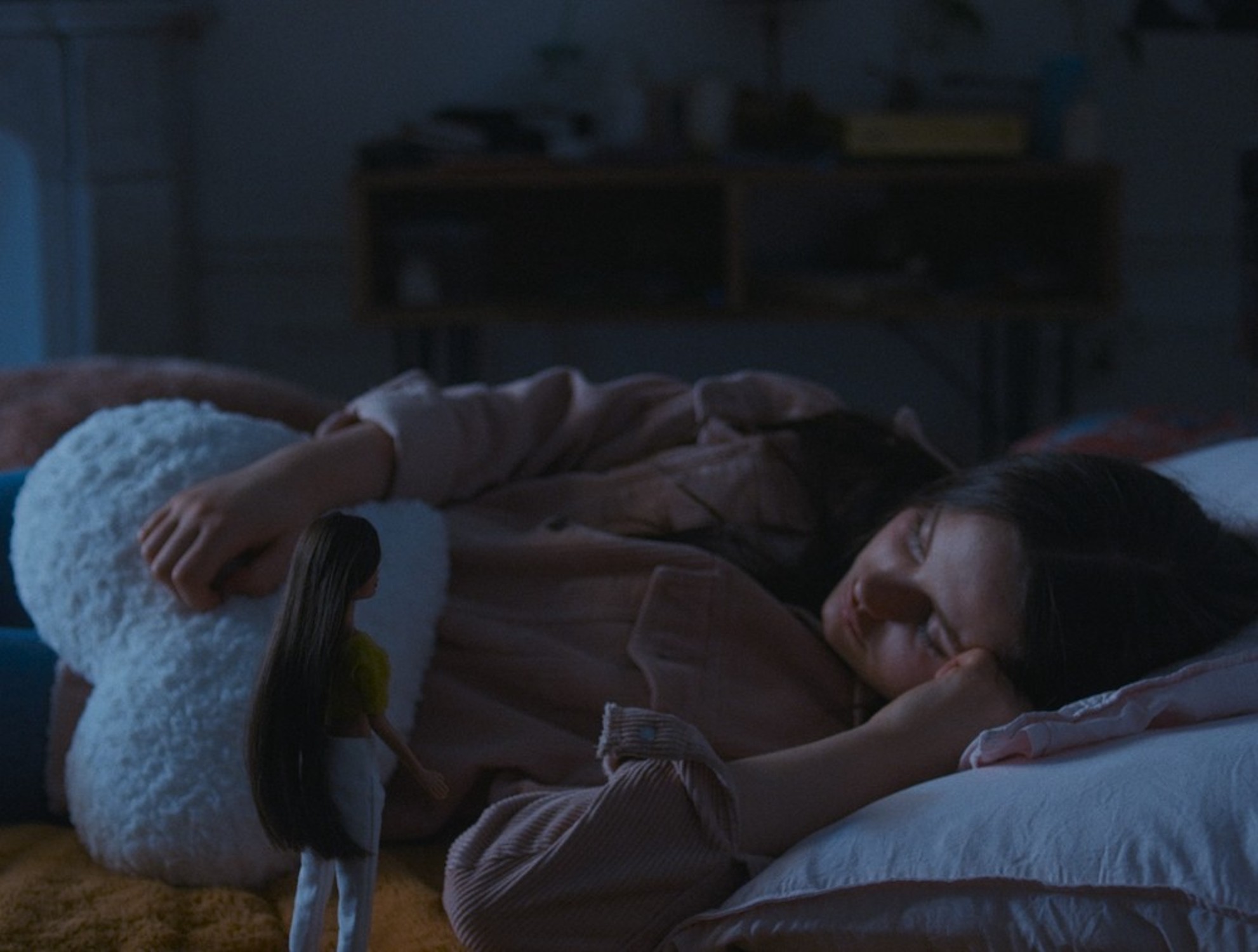
Once the prologue is done, we see a young girl (played by Zombi Child’s Louise Labeque) on her bed, trapped somewhere between crushing boredom and complete apathy. Her daily routines seem to fit with many others’ experiences: aimlessly scrolling on a laptop, gazing out the window or at the shadows on her roof, but she also has her own idiosyncrasies. She closely follows a YouTube “celebrity” by the name of Patricia Coma (Julia Faure) who has built a career as an influencer, salesperson, weather forecaster, and perhaps a medium or a specter. At first, she looks like your regular YouTube/TikTok influencer, but Bonello plays with the notion of the online persona to brilliantly create a tangible eeriness that steadily rises in tension and proximity. It is through Patricia’s channel that the young girl purchases a strange device called “the revelator.” It’s a small electronic device with four colored buttons, that light up in different patterns and demand that you remember and recreate it, in what seems like a potentially endless exercise. What at first looks like a simple distraction from the ennui of the lockdown, eventually seems to claim control and raises questions of free will and autonomy.
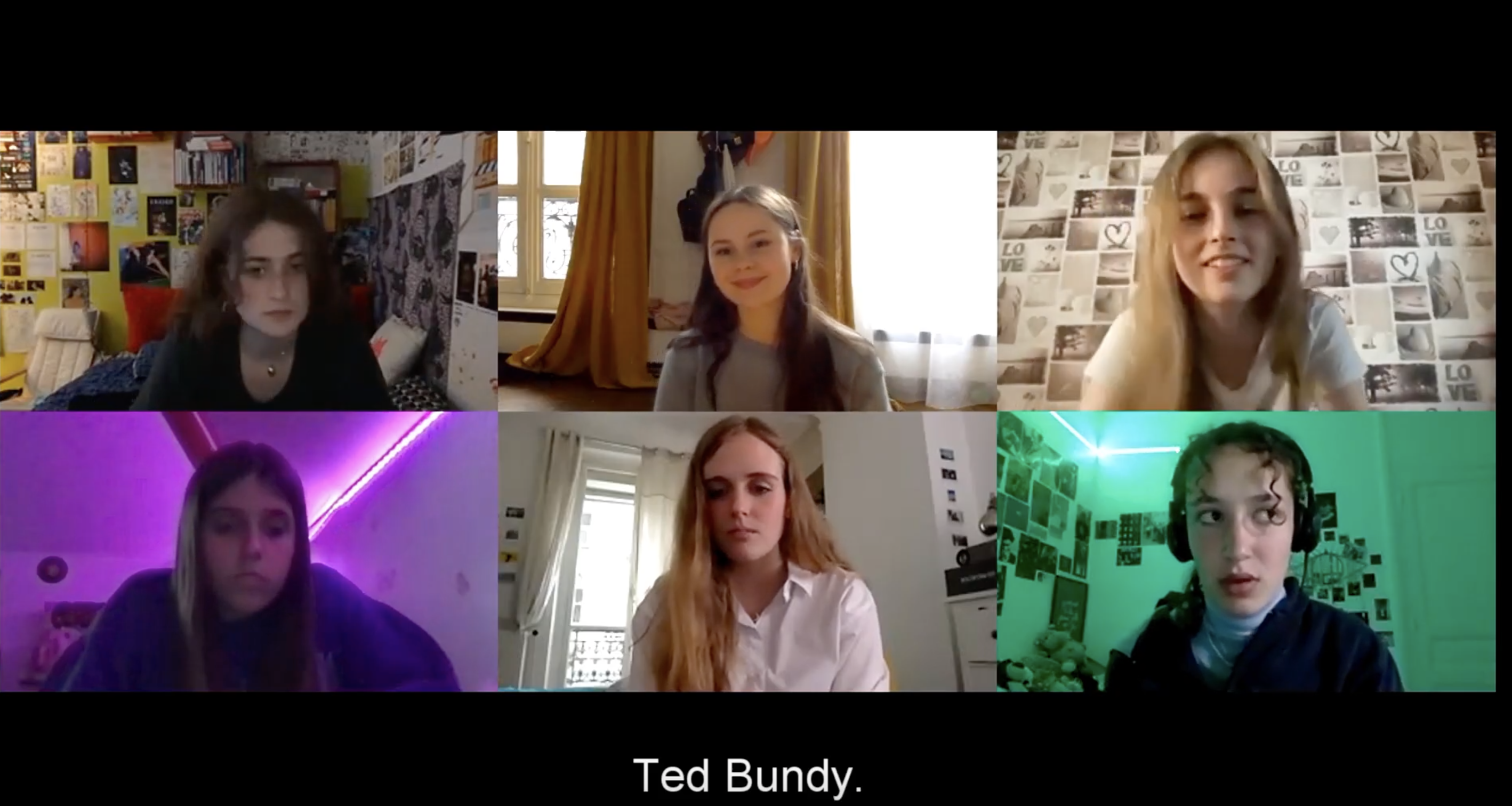
To combat the ennui of the lockdown, the girl is also on Zoom with her friends and classmates, not so much talking about school as who their favorite serial killers are. She also has a dollhouse, which she seems to observe more than interact with. In the dollhouse is a Barbie and a Ken, and they have their own melodrama in the film. This is where the film’s playfulness truly comes to the fore. Coma isn’t simply a “lockdown” film, it is also a desktop film (the Zoom calls, the YouTube videos), a stop-motion film (the lives of the dolls come to life in a soap opera about infidelity and identity), animation, and even a strange dream world. Bonello makes it seem effortless to move between different genres and styles, and he makes sure to anchor these oscillating forces in the rules (or lack thereof) of the narrative. It makes for a film that is truly unpredictable and strange, yet always makes sense. It is funny, sad, and scary all at the same time.
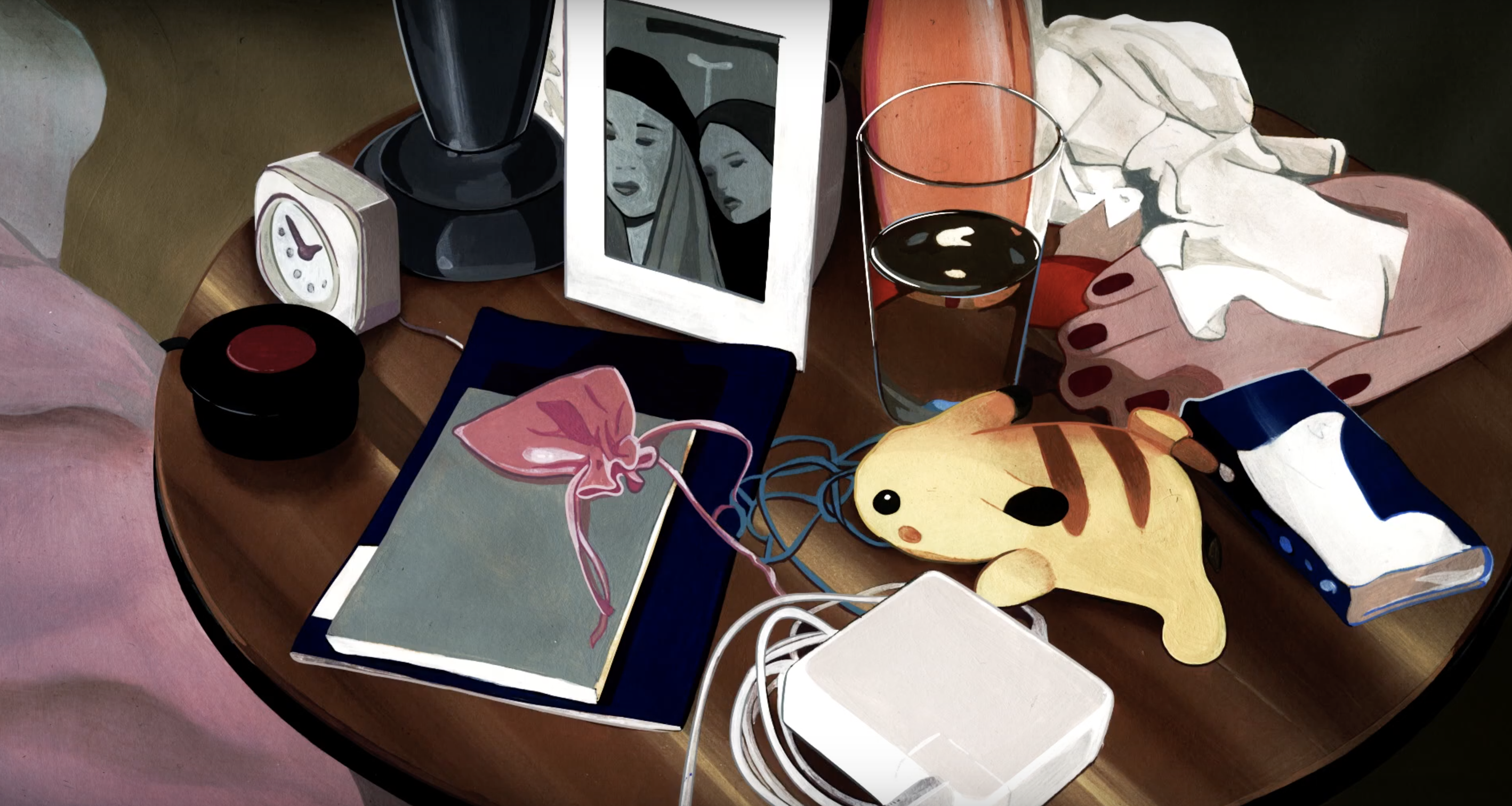
The playfulness in form allows Bonello’s creativity to fully flourish. His two latest masterpieces Nocturama and Zombi Child (which seem to form a sort of series with Coma) are very much rooted in his scholarly preoccupations and therefore more theoretical, whereas Coma goes in many different directions.
The Zoom conversation is reminiscent of Rob Savage’s excellent Host, with a touch of Michael Haneke’s distant gaze from Caché and the famous sequence behind the diner in David Lynch’s Mulholland Drive. The stop motion soap opera is at once absurdly funny and earnest. At one point the Ken doll says to his Barbie that “Robert Pattinson should find another girlfriend. Kristen will cheat on him again,” of course oblivious to the deterioration of his own relationship as a consequence of his own infidelities.
It is however the dream sequences, shot on an old tape camera, that is Bonello’s strongest creation in Coma. It is like the temporary limbo of the lockdown draws people into a woodland nightmare in which they can lose themselves completely and potentially never be able to leave.
The beautifully desaturated and grimy texture of the old tape camera places us firmly in the dark woods with the girl as she tries to find her bearings and avoid the pervasive presence of other people looming in the shadows of trees and boulders. If the girl’s bedroom is a limbo when the real would shut down, this nightmare is reminiscent of a Purgatory, in which she has to find her way back to herself or be lost forever. The girl eventually runs into Patricia Coma in these woods, and whether Patricia plays the role of Virgil or another more sinister figure is difficult to determine, but perhaps it’s a bit of both. In a moment of crisis, a figure of authority (artificial or not) might lend a hand and point you in a direction, but where that road leads is never easy to say until you get to the end.
Where it is the limbo of the real world that perhaps draws the girl into the dream world, it is Gilles Deleuze who conjures it to be a nightmare. The film engages explicitly with Deleuze’s now-famous talk in which he warns “beware of the Other’s dream.” Bonello intersperses the film with clips of Deleuze in extreme close-ups, each more ominous than the last. Given the fact that the film evokes Lynchian nightmare aesthetics, it seems less like a coincidence or subjective inference than a playful choice by Bonello, that the clip of Deleuze has been edited and gone (somewhat) viral with the Twin Peaks theme on YouTube. A metatextual nod to the online world in which his daughter grows up, accentuated by the pandemic of course.
Coma is a film in which Bonello addresses his daughter directly, and as much as it is a film for her, it is also a film for all of us. It is a film that warns about the dangers of late capitalism for the climate, our mental health, and our capacity for empathy, but also about the simple importance of self-care. Bonello’s love for his daughter shines through his concerns, skepticisms, and critiques, and so does his hope that she, and we, will love ourselves even when it’s most difficult.

