Joachim Trier is back in Cannes, and for the second time in his career, he’s nominated for the Palme d’Or (his first nomination was for Louder Than Bombs, and Oslo, August 31st was in the Un Certain Regard section in 2011). There’s a strange, but admittedly understandable and relatable, national pride that surrounds Trier’s international recognition here in Norway, especially whenever Cannes is involved. This, and the fact that The Worst Person in the World (Verdens verste menneske) has been said to function as the conclusion to Trier’s unofficial “Oslo-trilogy” (made up of Reprise from 2006 and Oslo, August 31st) means there are heavy expectations around the release of this film. Luckily, it delivers.
For a lot of people, especially in Norway, the release of Louder Than Bombs and Thelma was a worrying sign for Trier’s trajectory as a distinctly Norwegian director. It is an understandable concern, if not a premature one. Yet, these films did for some hint at a paradigmatic change in Trier’s approach. They were not about Oslo natives, although Thelma is set in the city, but there were also criticisms directed at the formal sensibilities of both films. There was a worry, at least anecdotally, that Trier seemed more concerned with the formal sensibilities of a contemporary American drama/genre School, rather than the European symbiosis of form and subject that so brilliantly shaped his humanist naturalism in Reprise and Oslo. In his first two features, Trier wears his influences on his sleeve, from Robert Bresson and Alain Resnais to Martin Scorsese. Unlike a lot of other first-time directors, he knew how to work with these influences to make them work for his vision, rather than drown it out. As much as I disagree with Harold Bloom, his theory of the anxiety of influence seems rather on point for Joachim Trier as a dedicated film lover turned director. The Worst Person in the World carries on this tradition, and it is truthfully a continuation of his Oslo project that will almost definitely satisfy those who have been calling for a return and those who—like me—appreciate his entire ouevre.
The Worst Person in the World is a tragicomic story about loves lost and loves found, aspirations for the future and fears about the days to come. It follows Julie (a truly brilliant and revelatory Renate Reinsve) who falls in and out of University degrees, career paths, and relationships (Anders Danielsen Lie, great as always, and Herbert Nordrum, like Reinsve a revelation) throughout the film. I won’t talk about specific plot points, but it is a moving character study through the lens of a love story. In a podcast from 2012 where Joachim Trier talks about his top 10 films of all time, he makes a casual observation about the love story in film history: “the love story as something melancholic and destructive is something we’ve seen time and time again.” This off-hand remark from an almost decade-old podcast is perhaps superfluous, but it seems appropriate in regards to The Worst Person in the World. Not because this is a love story that is melancholic and destructive, but because it is these things and much more.
In this sense, The Worst Person in the World is in direct dialogue with both Reprise and Oslo. These films are quite distinct from one another, in terms of the stories they tell, but their connections are much stronger than simply being set in Oslo, Norway (there’s a reason Oslo-set Thelma is not considered part of this trilogy). There’s an elegant interplay between a formal naturalism, that is sometimes reminiscent of Bresson, and a more virtuous cinematic mode of storytelling. The youthful aspirations in Reprise and the painful disassociation in Oslo (to simplify both films) is confronted with The Worst Person in the World, and the introspection of both films is here a more playful—and maybe hopeful—recollection of memories, or a confrontation of nostalgia, and an acceptance of uncertainty. This may seem quite dense and messy, and at times it is, exactly like the lives and decisions of the characters at the center of the story. Julie makes messy decisions at every turn, as we all do, and they all have their consequences. This is where Trier excels, these character portraits that feel genuine and real, while at the same time bold and cathartic in their formal playfulness.
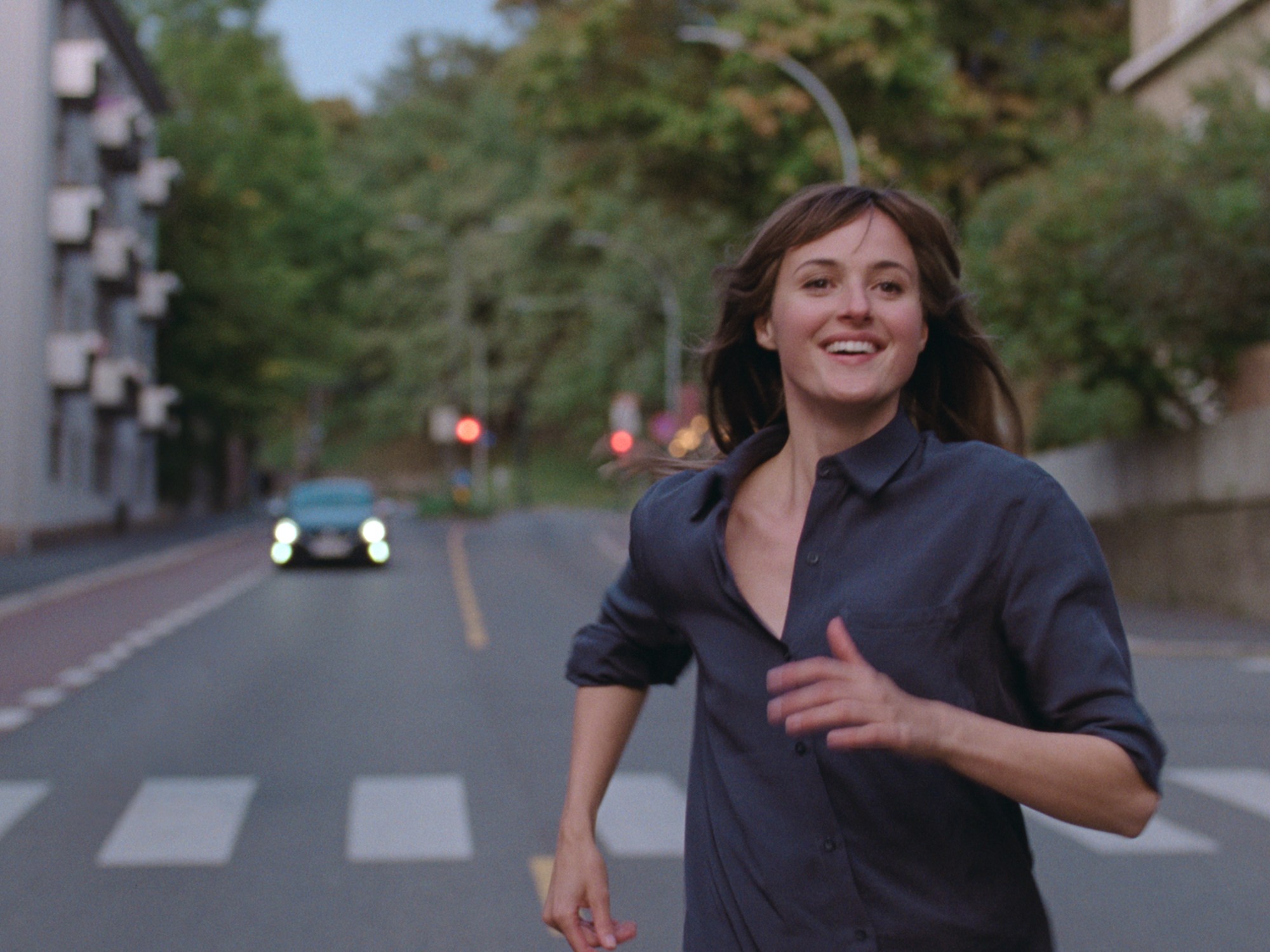
Joachim Trier has noted many times that he is interested in human narratives, but he’s also equally interested in what makes cinematic storytelling different from other modes of storytelling. This is evident in his films, and while Louder than Bombs and Thelma perhaps moved too far in the direction of American aestheticism for some, The Worst Person in the World is certainly back to familiar terrain. The specter of Bresson’s naturalism is back in the streets of Oslo, but it is more distant here than in Reprise and Oslo. It seems Trier has reconciled with his inspirations in every respect. The literariness that worked so well in Reprise is back through the form of its structure (it is split into 12 chapters, plus a prologue and an epilogue) and a voice-over with distinctly literary qualities. These literary intrusions accentuate the cinematic modes of storytelling, rather than complicate it, and bridges the naturalism of the narrative to the more showy cinematic sequences that Trier does with such skill. There’s a bold sequence in which Julie runs through the streets of Oslo, from one person to another, that is distinctly cinematic and abruptly shatters any illusion of reality or naturalism, but this—like the eccentricities of Reprise—only serves to further the emotional connection with the character that can only be achieved through an audiovisual aesthetic.
In the end, this is a film that is difficult to write about on first impressions alone. It is intrinsically linked to major expectations, as Trier’s work means so much to me, and it’s a challenge to separate the actual work from the immediate experience of having these expectations confronted in a dark theater. Yet, this does feel like a culmination of Trier’s Oslo project, and I believe it will satisfy those who felt that something was lost between 2011 and now. It feels like a culmination in the sense that it continues and expands upon thematic and aesthetic ideas that we found in Reprise and Oslo, and as a conclusion to this trilogy, it highlights his sensibilities in a brilliant manner, at the same time as it hints at what’s to come.

