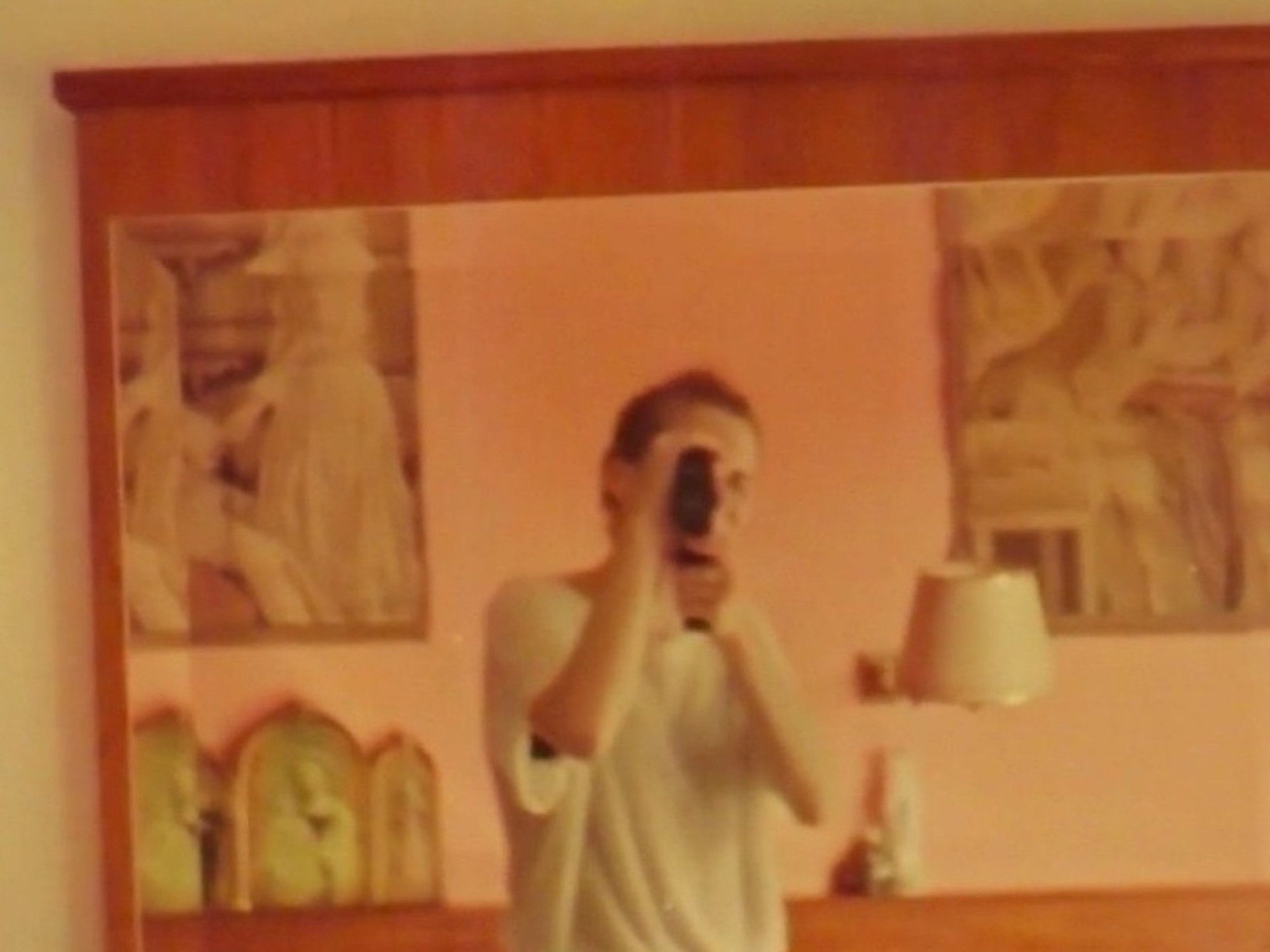
When Chilean filmmaker Dominga Sotomayor and Spanish filmmaker Carla Simón made their collaborative video letter film, Correspondencia in late 2019, the world was still unaware and unaffected by the COVID-19 pandemic. Their film is not about this pandemic, nor does it engage explicitly with the concepts of self-isolation and global turmoil, but to watch it now—in the so-called age of corona—makes the experience intrinsically linked to the world we live in at the moment.
It is not clear to me whether or not this is officially part of the “Correspondence” series from a few years back, where filmmakers such as Jonas Mekas, Naomi Kawase and Wang Bing shared video letters between each other. It is certainly linked, if only aesthetically, to that movement of personal conversations.
Correspondencia opens with a letter from Carla Simón to Dominga Sotomayor, with the lines: “My grandmother died three months ago. We’re cleaning out her apartment.” The film ends with a letter from Dominga Sotomayor to Carla Simón from the streets of Chile in the early days of the current unrest. The film moves seamlessly between the personal and familial, to the urgent political situation in Chile. As the two filmmakers look back on their family tree, they open the door for questions about mothers, daughters and filmmakers. “My biological mother gave me my genes. My adoptive mother gave me my education. I don’t know which parts of me come from one or the other.” Says Simón and continues: “Maybe when I have my own children, I’ll be able to tell the difference between genetics and education. Or maybe not… It’s an eternal question.” Simón also raises the question if it’s possible to make films and have children.
Sotomayor engages eagerly with Simón’s musings on mothers and motherhood, but she also reflects on Chile’s 1988 “No” Campaign—which, of course, also informed her tremendous feature film Too Late to Die Young. Correspondencia is in many ways a film on the intersectionality of feminist thought, and it is brilliantly executed as the two filmmakers form a bridge which shows us how these separate subjects are still interlinked.
It works because of their communication. Their video letters, which meld images with personal confessions and reflections, seem to open them up to one another and each letter reveal just as much about themselves as each other. This, I believe, is essential for us to understand at the moment.
The world has now been in collective lockdown, or self-isolation, for more than two months, and while certain countries (like my own Norway) are rushing to reopen and cut back on regulations, this has been a formative moment in time for most of us. We have seen people step up for the collective good, whether it be the invaluable service of essential workers or regular individuals doing their part in stopping the spread of the virus. There have of course been countless scenarios of less than intelligent people who break regulations and laws for their own selfish reasons, but I feel (maybe naively) that the majority have felt a sense of collective responsibility in the past two months. This responsibility involves self-isolation, and for a lot of people this has been very difficult and will continue to be so for a while longer.
As we have locked ourselves in our homes, away from friends, families, colleagues and strangers, loneliness has been a certainty for a lot of us, even with the instant gratification of the countless communication tools of the modern internet age. Facebook, Twitter, What’s App, Telegram, and the surge of new Zoom accounts. The list, I’m sure, could go one for days. While these forms of communication are valuable, now as ever, it is difficult to pretend that they counteract loneliness. There is a lot of research online suggesting they do the exact opposite. This is how Sotomayor and Simón’s Correspondencia feels essential to today’s climate. Their correspondence is not instant, but it is tangible. And at a time where we are all in desperate need of tangible contact, maybe even a letter would suffice.


One thought on “Correspondencia — The Search for Earnest Communication in Isolation”